

Portable Appliance Testing (PAT Testing) is one of the most misunderstood and frequently skipped compliance tasks for self-employed tradesmen and construction companies in the UK.
While the term “PAT Testing” itself is not a specific legal requirement, the duty to maintain electrical equipment in a safe condition is mandated by law.
Ignoring this duty doesn’t just put lives at risk and it exposes you and your business to severe fines, invalid insurance, and potential criminal prosecution under workplace safety laws.
The Law: Why You Must Ensure Electrical Safety
The legal framework for electrical safety in the workplace is primarily defined by the Electricity at Work Regulations (1989) (EAW Regulations).
Specifically, Regulation 4(2) states that:
“As may be necessary to prevent danger, all systems shall be maintained in a safe condition.“
For a tradesman, a “system” includes your electric drills, circular saws, grinders, extension leads, and even charging equipment. PAT testing is simply the most robust and documented way to fulfil this legal duty of maintenance.
Who is responsible?
The responsibility for electrical safety rests with the Duty Holder. This is usually the employer, the site manager, or, in the case of a self-employed tradesman, the individual tradesman themselves. You are responsible for every piece of electrical equipment you bring onto a job site.
What Equipment Needs to be Tested? (The Scope)
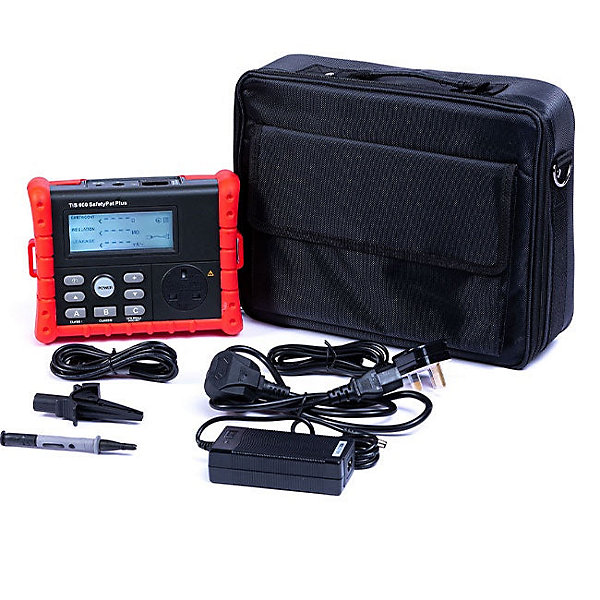
PAT testing applies to all portable electrical equipment used in a working environment. This includes any appliance with a plug that is moved or can be easily moved.
Equipment Class | Description | Examples | Test Frequency |
|---|---|---|---|
Class I | Relies on an earth connection for safety (e.g., standard mains plug tools). Requires a full earth continuity test. | Corded drills, angle grinders, site transformers, heavy-duty extension leads. | High Risk (6 months) |
Class II | Double-insulated, meaning it has an extra layer of insulation and does not rely on earth (marked with a square symbol) | Chargers for cordless tools, small hand tools with plastic cases. | Medium Risk (12 months) |
Extension Leads | Often suffer heavy mechanical stress and are considered the highest risk items on a site. Must be tested thoroughly. | 110V and 240V site leads, cable reels. | Very High Risk (3-6 months) |
Cordless Tool Chargers: While the cordless tool itself is not PAT tested, its charger is a mains-powered Class II appliance and must be tested.
Learn the full scope of your testing duties here: What Tools Actually Need a PAT Test? (Power Tool vs. Hand Tool).
Understanding PAT Test Frequency (Risk Assessment is Key)
There is no set law stating you must test a drill every six months. The frequency must be based on a formal Risk Assessment that considers three main factors:
- Environment: The harsher the environment, the more frequent the test. A construction site (high risk: dust, moisture, physical damage) requires much shorter intervals than an office (low risk).
- Equipment Type: Items that are regularly dragged or stressed, like extension leads, require more checks.
- User Skills: If the user is trained to perform a Formal Visual Inspection (FVI) before every use, the recorded PAT test interval can be longer.
Environment/Item | Recommended Max Interval |
|---|---|
High-Risk Sites (Construction, Demolition) | 3 to 6 months |
Industrial/Workshop (Heavy Use) | 6 to 12 months |
Site Extension Leads | 3 months (plus FVI daily) |
Low-Risk Office (Laptops, Printers) | 24 to 48 months |
Documentation: Your Legal Defence
The process of PAT testing is useless without proper documentation. Maintaining an up-to-date log provides your legal defence, proving you met your statutory obligations under the EAW Regulations.
Essential Documentation:
- Asset Register: A list of all portable electrical items, including make, model, serial number, and class.
- Test Results Log: A record of the date, test outcome (PASS}/FAIL), reading (mA/Ohms), and the name of the competent person who carried out the test.
- Repair Log: A record of any repairs or maintenance carried out on failed equipment.
The documentation must be kept for the lifespan of the equipment.
Failing to comply with the EAW Regulations can result in serious penalties. Read more here: Is it Illegal to Skip PAT Testing? (Consequences for Tradesmen).
The Competent Person: Who Can Test?
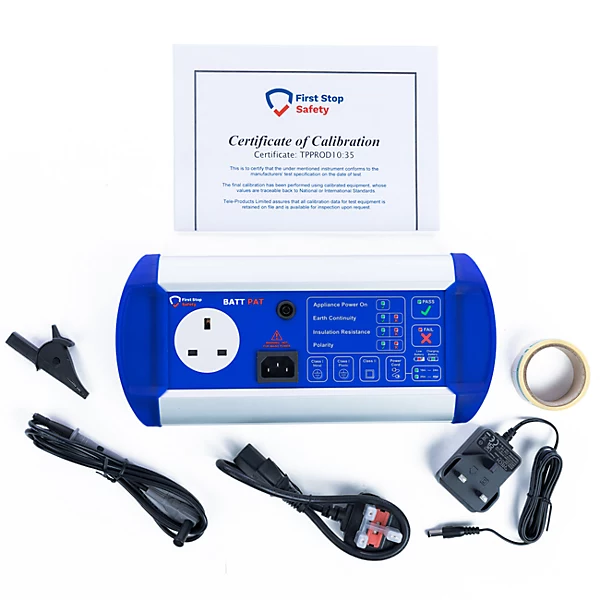
A common misconception is that only a fully qualified electrician can perform PAT testing. This is not true. The testing must be done by a Competent Person.
A competent person is someone who:
- Has the necessary technical knowledge and experience (usually gained via a specific PAT training course).
- Understands the equipment and potential hazards involved.
- Is capable of deciding whether the equipment is safe to use.
If you purchase a PAT testing course and the required equipment, you can legally test your own gear.
Step-by-Step PAT Testing Process Overview
- Formal Visual Inspection (FVI): Always the first step. Check the lead, the plug, the casing, and the strain relief for any damage. Up to 95% of electrical faults are found during this visual check.
- Electrical Testing: Use a PAT tester (a dedicated machine) to perform the required sequence of tests for the equipment class (Earth Continuity, Insulation Resistance and Lead Polarity.
- Labelling: Affix a durable sticker clearly indicating the test date, next test date, and the PASS result.
- Recording: Immediately update the Asset Register and Test Results Log.
For a detailed guide on testing the highest-risk item in your kit: How to Inspect and Test an Extension Lead (High-Risk Item).
Summary of PAT Testing
In reality most UK businesses simply find a local electrician or company who are qualified to do PAT testing. It’s not an expensive thing to get completed. They will issue a certificate of completion and do all of the labels.
It’s really important though to maintain the asset register. This becomes more important when they are lots of employees using a lot of tools. As a business or trades person you do need to keep yourself covered under law.