
In this article I am going to explain step by step how to use a hacksaw properly. Hacksaws are used to cut metal or plastic. Typical items that are cut using a hacksaw are curtain poles, conduit, bolts, metal rods, carpet grippers for around doors, etc. They should never be used to cut wood.
Expert Verdict: “In my 50 years, I’ve seen more broken blades and wonky cuts from hacksaws than any other tool. Most people treat a hacksaw like a workout, but it’s actually a tool of finesse. Use the right blade and the right technique, and you’ll cut through copper, steel, or plastic like it’s butter.”

1. The Anatomy of a Perfect Cut
Before you even touch the metal, you need to understand the tool. Unlike a wood saw, a hacksaw is a “Tension Saw.”
- The Frame: Whether it’s a full size frame or a Junior hacksaw, the frame’s job is to keep that thin blade under immense tension. If the blade “wobbles” or “paints” side-to-side, your cut will never be straight.
- The Blade Direction – Crucial Rule: The teeth must always point away from the handle. A hacksaw is designed to cut on the push stroke.
Enda’s Veteran Tip: “I’ve seen blokes sawing away for ten minutes getting nowhere, only to realise they’ve got the blade in backwards. Look for the little arrow on the blade, it should point forward!”
2. Choosing Your Weapon: Standard vs. Junior
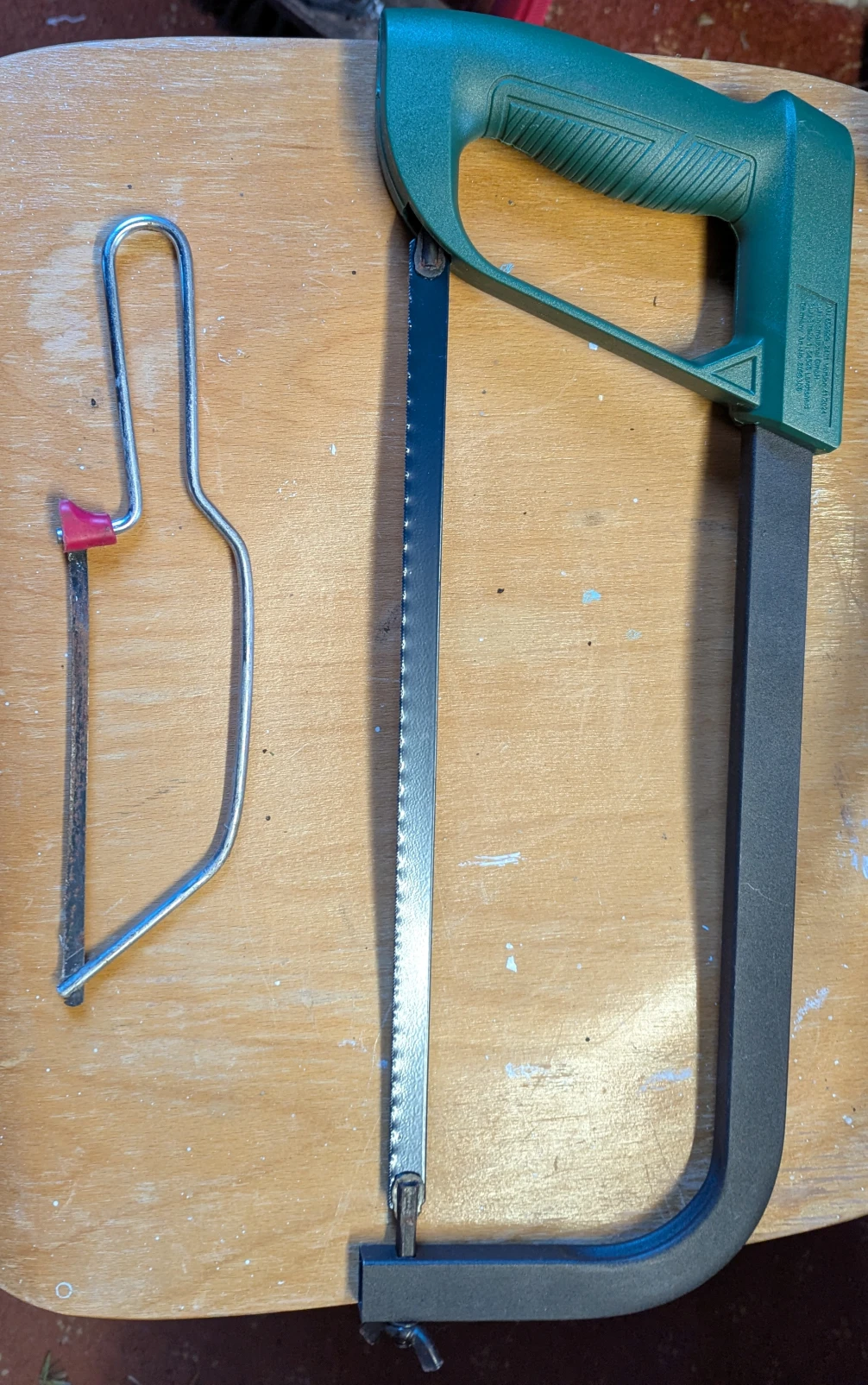
These are my 2 most used hacksaws, a basic junior and a standard one that I bought in LIDL.
There are two main types of hacksaw
- A standard 300mm (12″)
- A Junior 150mm (6″)
In the table below you can see where you would pick one over the other. I find the junior hacksaw ideal for cutting pipes and conduit, and any fiddly job. Other than those jobs, I tend to use my full size standard hacksaw.
Feature | Standard Hacksaw (12″) | Junior Hacksaw (6″) |
|---|---|---|
Best For | Heavy steel, thick PVC, large bolts. | Copper pipes, small plastic trim, tight corners. |
Power | Two-handed use for maximum “grunt.” | One handed precision. |
Pros | Blade is replaceable and adjustable. | Fits into places a big saw can’t reach. |
Enda’s Tip: I recommend having one of each as they are both handy to own. They don’t cost a lot of money in the UK, so worth having in your tool box.
3. The “TPI” Secret (Teeth Per Inch)
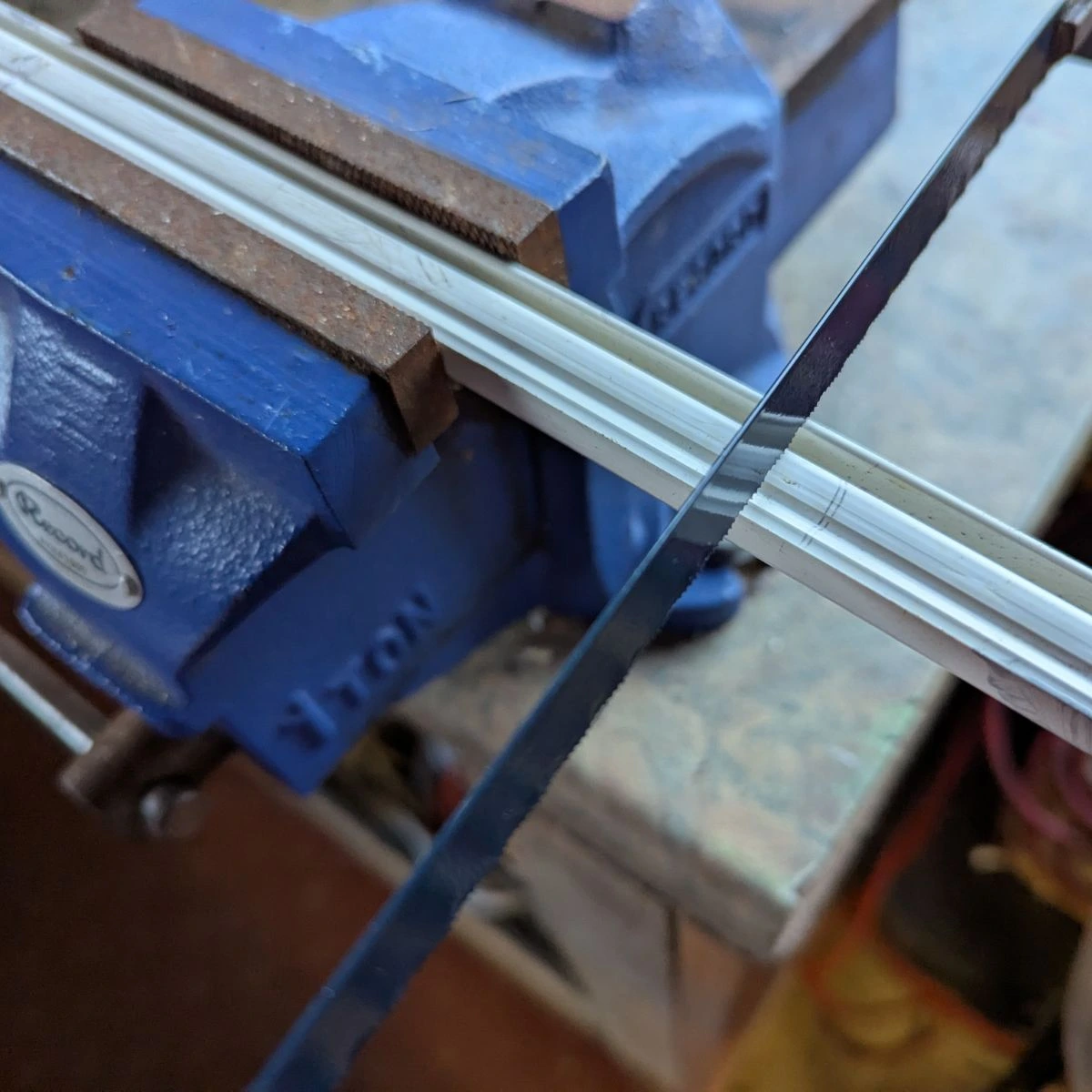
The image above shows me using a standard hacksaw from LIDL to cut a plastic curtain rail held in a vice in my garage
Any hacksaw is really only as good as the blade you have in it. Avoid really cheap blades as they really don’t cut well and simply lead to being frustrated.
Expert Tip: Over the many years I have tried a variety of blades. I have always found “Draper blades” to be the best for using on different materials. You typically buy these in a pack of 5 which have different tooth settings on the blades, and I find them to be really good value for money.
If you use the wrong teeth, the blade will either “skate” over the top or “snag” and snap. Just below is my recommended use of hacksaw TPI blades.
- 18 TPI (Coarse): Best for thick materials like heavy steel rods or thick-walled PVC.
- 24 TPI (Medium): The “Goldilocks” blade. This is your go to for general DIY, copper plumbing, and standard bolts.
- 32 TPI (Fine): Essential for very thin materials like electrical conduit or sheet metal.
The 3-Teeth Rule: “Always ensure at least 3 teeth are touching the material at all times. If you have fewer than 3 teeth engaged, the blade will ‘catch’ on the edge and either ruin your work or snap the blade.”
Enda’s Tip: When you make a cut with any type of hacksaw, the edge will always feel rough. A finer tooth blade reduces that “rough feel.” Later on, I explain how to use a file on the edges.
4. Enda’s 5 Steps to a Pro Cut
- Mark the Line: Use a permanent marker. For pipes, wrap a piece of masking tape around the pipe to create a perfectly straight “guide” line.
- The Starting Notch: Use your thumb as a guide (be careful!) and pull the saw backward once or twice to create a tiny groove. This stops the blade from skidding across your nice material.
- The Stance: Stand sideways to your work, like a boxer. Hold the handle with your dominant hand and the front of the frame with the other for control.
- Pressure on the PUSH: Apply firm pressure as you push forward. On the return (pull) stroke, lift the pressure. If you grind the teeth backward, you’ll blunt the blade in minutes.(Really Important)
- Finish Slow: As you reach the end of the cut, slow down. This prevents the metal from “tearing” or “burring” at the very end.
The Final Step: Don’t Forget to Deburr
“If you leave a freshly cut piece of metal as it is, you’ve essentially created a serrated knife. I’ve seen more DIYers get a nasty cut from the ‘burr’ of a pipe than from the saw itself.”
The “Enda” File Method:
- The Outside Edge: Take a Mill File or a Flat File and run it at a 45-degree angle around the edge of the cut. You aren’t trying to reshape it, but simply just “knock the edge off.”
- The Inside (For Pipes or conduit): If you’ve cut a pipe, you’ll have a lip on the inside that restricts water flow or damage a cable in conduit. Use a Round File (Rat-tail) or a Half-round File to clean out the inside.
- The “Nut” Trick: If you’ve shortened a bolt, the thread will be mangled. File a slight “chamfer” (a bevel) onto the end of the bolt. This makes it much easier to start the nut without cross-threading it.
Even with plastic conduit or any plastic, a slightly rough edge will be left. A couple of run overs with a file will tidy that up very quickly for a proper finished result.
Veteran Tip: “If you find your file is getting ‘clogged’ with soft metal like aluminium or lead, rub a bit of blackboard chalk into the teeth of the file first. It stops the metal from sticking and makes it much easier to clean later.”
6. Maintenance: How to Make a Blade Last 10 Years
- Release the Tension: When you’re finished for the day, loosen the wingnut slightly. Keeping a blade under 24/7 tension can actually warp the frame over time.
- A Drop of Oil: If you’re cutting thick steel, a drop of 3-in-1 oil on the blade reduces friction and keeps the teeth cool.
- Store it Dry: Especially in a damp UK garage! A rusty blade is a blunt blade.
Using a Hacksaw Safely (The Knuckle-Saver)
You might well think the biggest risk of an injury is a cut. However, in my years of using these, and watching many others, the biggest risk is actually “barking your knuckles.”
This is when the blade suddenly finishes the cut and your hand slams into the metal workpiece. Believe me that’s painful!
Enda’s “Knuckle-Saver” Rule: “As you get toward the very end of your cut, the resistance will drop. This is when most people have an accident. Slow down and shorten your strokes. Use your ‘off-hand’ to support the piece that’s about to fall off. This prevents the metal from snapping prematurely and keeps your knuckles away from the jagged edges.”
Conclusion: It’s All in the Tension
Cutting metal doesn’t have to be a struggle. If you remember to choose the right TPI, keep your blade tight, and always deburr your edges, you’ll find that a hacksaw is one of the most reliable tools in your workshop.
The next time you’re faced with a stubborn bolt or a plumbing repair, don’t rush it. Let the saw do the work, and your knuckles (and your workpiece) will thank you.
Ready to upgrade your toolkit?
Now that you know the technique, make sure you have the right gear. I’ve put the top brands through their paces to see which ones actually hold their tension and which ones are just “glorified coat hangers.”
[Read my 2025 Guide to the Best Hacksaws for UK DIYers]
[Small but Mighty: The Best Junior Hacksaws Reviewed]Stay Safe in the Workshop
A clean cut is great, but keeping your fingers intact is better. Check out my [Safety Checklist for Hand Tool Users] for more tips on avoiding common workshop injuries.
FAQ
Q: Why does my hacksaw blade keep snapping?
Enda’s Answer: Nine times out of ten, it’s because you’re applying too much pressure or your TPI is too low. If the teeth “snag” on the metal, the sudden jolt snaps the brittle high-carbon steel. Lighten your touch and let the teeth do the work.
Q: Why is my cut drifting to the left/right?
Enda’s Answer: This is usually down to low blade tension. If the blade isn’t “ping” tight, it will bend (deflect) as it hits the resistance of the metal. Tighten the wingnut until the blade doesn’t flex when you push it with your finger.
Q: Can I use a hacksaw to cut wood?
Enda’s Answer: You can in an absolute emergency, but I wouldn’t recommend it. The tiny teeth of a hacksaw will clog up with wood fibers immediately, making the job ten times harder than it needs to be. Use a proper tenon saw or handsaw for timber.
Q: Why is my blade “screaming” or “smoking?”
Enda’s Answer: Friction causes heat. If you’re cutting thick steel and the blade is getting hot, it will blunt the teeth. Use a drop of 3-in-1 oil or even a bit of candle wax on the blade to act as a lubricant. It makes a world of difference.