
Sharpening tools with an angle grinder is fast, effective, and ideal for restoring edges on garden tools, workshop tools, and general household kit. Whether you’re sharpening a lawnmower blade, an axe, a chisel, or a shovel, an angle grinder can bring a dull edge back to life in minutes.
I’ve been doing this for decades in my garage here in Northern Ireland, and in this guide I’ll show you the safest, simplest way to sharpen tools — even if you’re a complete beginner.
Before you start, I recommend reading my Angle Grinder Safety UK guide. Sharpening produces sparks, heat, and metal dust, so proper PPE is essential.
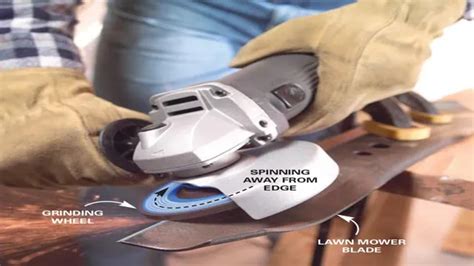
What You Can Sharpen with an Angle Grinder
Angle grinders are ideal for:
- Lawn mower blades
- Axes and hatchets
- Shovels and spades
- Garden shears (rough sharpening only)
- Machetes
- Heavy chisels
- Pry bars
- Scrapers
They are not ideal for:
- Fine woodworking chisels
- Plane irons
- Knives (too aggressive)
What You’ll Need
- Angle grinder (115mm is perfect)
- Grinding disc (6mm) or flap disc (40–60 grit)
- Clamp or vice
- Safety glasses or face shield
- Gloves
- Ear protection
- Marker or scribe
If you’re unsure about disc types, see my Angle Grinder Disc Types Explained.
Safety First
Sharpening throws sparks and metal dust. Always wear:
- eye protection
- gloves
- a dust mask
Clamp the tool securely — never hold it in your hand while sharpening.
For full safety guidance, see my Angle Grinder Safety UK.
Step‑by‑Step: How to Sharpen Tools with an Angle Grinder
Step 1: Secure the Tool
Clamp the tool firmly in a vice or on a workbench.
The edge should be facing upward and slightly angled toward you.
Step 2: Choose the Right Disc
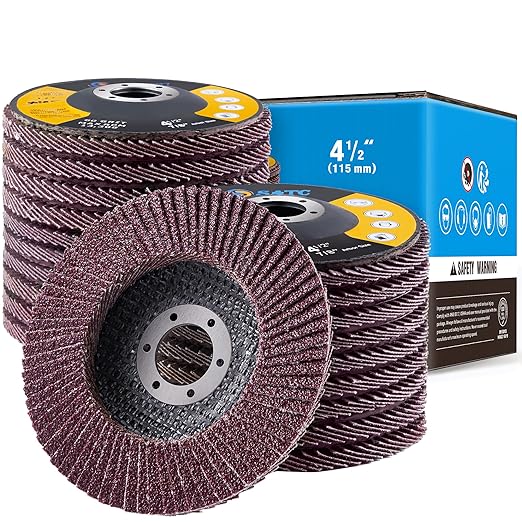
For sharpening, use:
- Grinding disc → for heavy reshaping
- Flap disc (40–60 grit) → for controlled sharpening and smoother edges
Flap discs are easier for beginners because they remove metal more gently.
Step 3: Mark the Bevel Angle (Optional)
Use a marker to highlight the existing bevel.
This helps you follow the original angle and avoid over‑grinding.
Step 4: Start the Grinder and Let It Reach Full Speed
Never touch the tool until the disc is spinning at full speed.
This gives you a smoother, more controlled grind.
Step 5: Sharpen with Light, Controlled Passes
Hold the grinder at the same angle as the bevel. (Take your time to make sure this is correct and keep checking.)
Use smooth, sweeping motions along the edge.
Do not stay in one spot — you’ll overheat the metal.
Step 6: Cool the Tool Frequently
Dip the tool in water every few passes.
Overheating can:
- soften the metal
- ruin the temper
- cause blue heat marks
Keeping it cool preserves the edge.
Step 7: Check the Edge
You’re aiming for:
- a clean, even bevel
- no flat spots
- no burn marks
- a consistent angle
If needed, switch to a finer flap disc to refine the edge.
Sharpening Different Tools
Lawnmower Blades
- Use a flap disc
- Follow the factory angle
- Keep the blade balanced (grind both sides evenly)
Axes or Hatchets
- Use a grinding disc for shaping
- Finish with a flap disc
- Maintain a convex edge for strength
Shovels & Spades
- A quick pass with a grinding disc is enough
- You only need a functional edge, not razor sharp
Chisels (rough work only)
- Use a flap disc
- Keep the angle shallow
- Do not overheat the tip
Common Mistakes to Avoid
- Pressing too hard
- Overheating the metal
- Changing the bevel angle
- Using a cutting disc (dangerous)
- Sharpening freehand without clamping
- Trying to make a razor‑sharp edge (not needed for most tools)
Recommended Tools & Guides
FAQs
Can an angle grinder make tools razor sharp?
No — it’s too aggressive. Use a whetstone or bench grinder for fine edges.
Why is my tool turning blue?
It’s overheating. Cool it in water and use lighter passes.
Which disc is best for beginners?
A flap disc — it’s forgiving and gives a smoother finish.
Can I sharpen knives with an angle grinder?
Technically yes, but it’s not recommended. It removes too much metal too quickly.
My Final Thoughts
Sharpening tools with an angle grinder is fast, effective, and ideal for restoring working edges on garden and workshop tools. With the right disc, a steady hand, and proper cooling, you’ll get clean, functional edges that last. Take your time, follow the original bevel, and always prioritise safety.