
Noise from power tools is often quite irritating. It can be a serious health risk. It is worth knowing that hearing damage doesn’t happen overnight. In almost every case, it builds up gradually, often without people noticing until it’s too late.
Once your hearing is gone, it’s permanent. Yet many DIY enthusiasts and even seasoned professionals still underestimate the danger, relying on inadequate ear defenders or skipping protection altogether.
The result is preventable hearing loss, that is caused by everyday tasks in sheds, garages, and workshops across the UK.
The Health and Safety Executive (HSE) has long warned about the risks of occupational noise exposure. That is why they introduced the Control of Noise at Work Regulations 2005.
These regulations set clear legal standards for employers. The reality is these rules aren’t just for big construction sites as they apply to anyone using noisy equipment.
The regulations establish two critical thresholds:
- At 80 decibels (dB), employers must provide hearing protection and information
- At 85 dB, they must ensure protection is worn.
These numbers are not arbitrary as they reflect the point at which prolonged exposure begins to cause irreversible damage.
For DIYers, understanding these limits is just as important as it is for professionals. A circular saw, angle grinder, or hammer drill can easily exceed 100 dB, meaning even short bursts of use can put your hearing at risk.
The good news is that protecting yourself is straightforward once you know the rules. By learning how to match the Single Number Rating (SNR) of ear defenders or plugs to the noise levels of your tools, you can make informed choices that safeguard your hearing for life.
This article will guide you through the UK noise regulations, explain the 80 dB and 85 dB thresholds in plain terms, and show you how to select the right hearing protection, whether you’re on a job site or tinkering in your shed.
Understanding UK Noise Regulations
The UK Law: Understanding the Action Levels
The Control of Noise at Work Regulations 2005, enforced by the Health and Safety Executive (HSE), set clear rules for managing noise exposure in the workplace.
These regulations establish three key thresholds, also known as action levels that determine when employers must act to protect workers’ hearing.
Even if you’re a DIYer, understanding these levels helps you apply the same standards to your own shed or workshop.
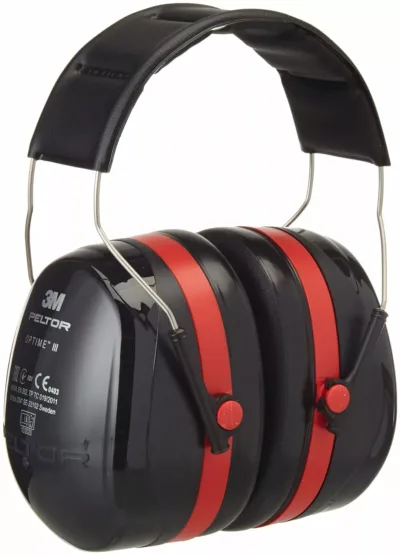
The First Action Level (80 dB)
At 80 decibels (dB), employers are legally required to provide information about the risks of noise exposure and make hearing protection available if requested. However, at this stage, wearing protection is optional.
Think of 80 dB as the sound of a busy street or heavy traffic. As you may know, this is not immediately painful, but prolonged exposure can still cause damage over time. This level is the “warning sign” where awareness and access to protection become essential.
The Mandatory Action Level (85 dB)
Once noise reaches 85 dB, the law becomes much stricter. Employers must ensure that hearing protection is not only available but actually worn. It’s important to understand that short bursts of exposure at this level can contribute to permanent hearing loss.
To put this in perspective, 85 dB is roughly equivalent to standing near a lawnmower, while 100 dB, (common with chainsaws or angle grinders) is far louder and far more dangerous.
The decibel scale is logarithmic, meaning every increase of 10 dB represents a tenfold increase in sound intensity. That’s why the jump from 80 to 100 dB is not just “a bit louder,” it is dramatically more harmful.
The Exposure Limit Value (87 dB)
Finally, the regulations set an Exposure Limit Value (ELV) of 87 dB. This figure accounts for the protection provided by ear defenders or plugs. In other words, no worker should ever be exposed to noise above 87 dB once hearing protection is factored in.
This limit is absolute as exceeding it means the protection in use is inadequate, and stronger measures must be taken. For DIYers, this is the benchmark. If your tools are louder than this, you must ensure your chosen protection reduces the effective exposure below the limit.
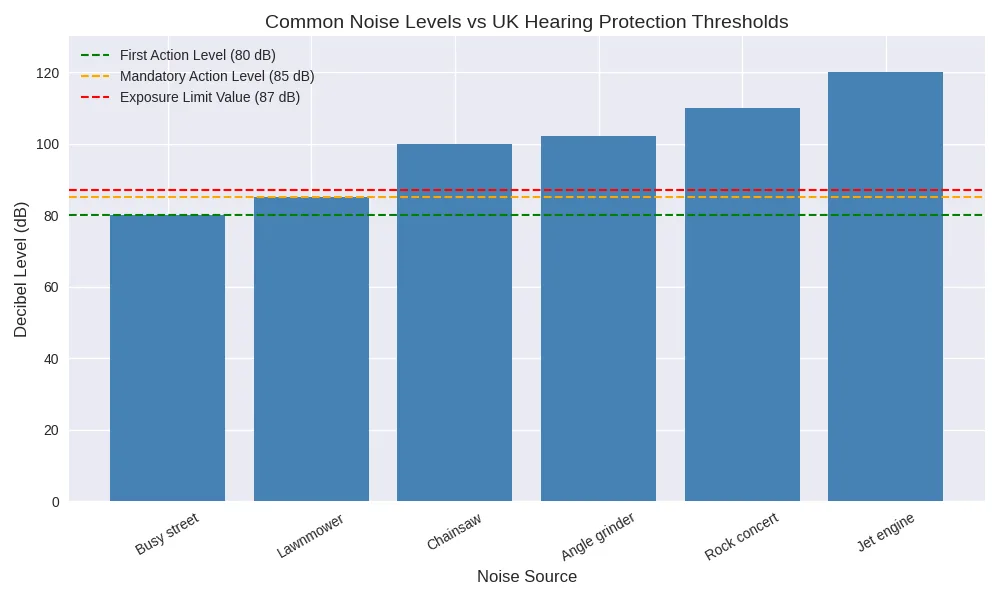
How to Read the Chart
- Green line (80 dB) → The First Action Level: protection must be offered, but use is optional.
- Orange line (85 dB) → The Mandatory Action Level: protection must be worn at or above this level.
- Red line (87 dB) → The Exposure Limit Value: no one should be exposed beyond this, even after protection is factored in.
Everyday Analogies
- Busy street (80 dB) → Comparable to the first warning threshold.
- Lawnmower (85 dB) → Right at the mandatory protection level.
- Chainsaw (100 dB) and Angle grinder (102 dB) → Far above safe limits, requiring strong hearing protection.
- Rock concert (110 dB) and Jet engine (120 dB) → Extreme exposures where even short bursts can cause damage.
The Science of Protection: What is SNR?
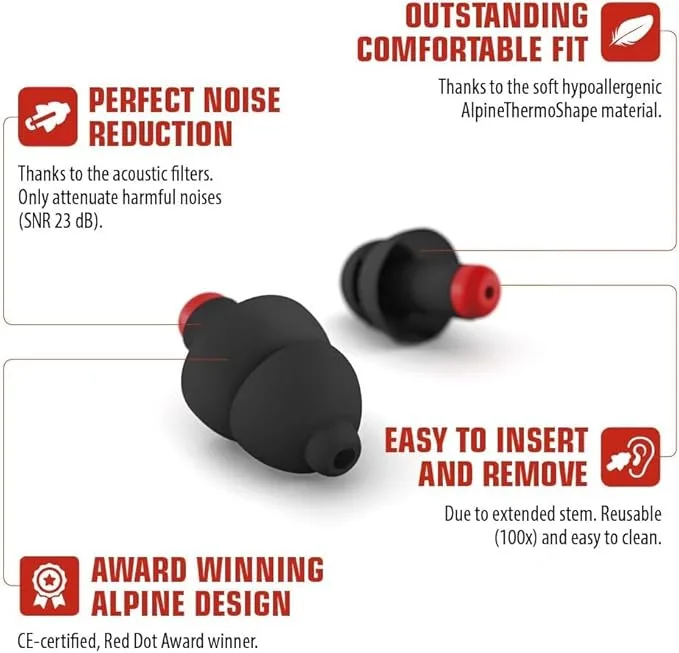
Deciphering the SNR Rating (Single Number Rating)
When choosing hearing protection, one of the most important figures to understand is the SNR (Single Number Rating). Put simply, the SNR tells you how many decibels (dB) the protector reduces from the noise level you’re exposed to.
For example, if your tool produces 100 dB of noise and your ear defenders have an SNR of 30, the effective noise reaching your ears is reduced to 70 dB.
The Calculation
The formula is straightforward:
Exposure = Tool Noise − SNR Rating
This calculation allows you to quickly check whether your chosen protection is adequate. If the result is still above the legal thresholds, you’ll need stronger protection.
The Goal
The ultimate aim is to bring your exposure down into the safe range of 70–75 dB. This is the level at which your ears can operate comfortably without risk of cumulative damage. Anything above this range, especially over long periods, increases the likelihood of permanent hearing loss.
By understanding and applying the SNR rating, you can make informed choices about ear defenders or plugs. This ensures that whether you are using a hammer drill in your shed or a chainsaw on site, your hearing remains protected for the long term.
Noise Levels of Common UK Power Tools
Common UK Power Tool Noise Levels and Required Protection
When selecting hearing protection, it helps to see how everyday tools compare against the UK noise thresholds. The table below shows typical noise levels for common power tools and the required SNR rating needed to reduce exposure to the safe range of around 75 dB.
Power Tool | Typical Noise Level (dB) | Risk Level vs UK Thresholds | Recommended SNR Rating for Ear Protection |
|---|---|---|---|
Cordless Drill | 85-90 dB | At/above mandatory action level | SNR 20–25 (basic earplugs or defenders) |
Circular Saw | 100-105 dB | Far above safe limit | SNR 25–30 (high‑attenuation defenders) |
Angle Grinder | 100-102 dB | Far above safe limit | SNR 25–30 (high‑attenuation defenders) |
Hammer Drill | 95-100 dB | Above mandatory level | SNR 25–30 |
Chainsaw | 105-110 dB | Extreme exposure | SNR 30+ (specialist defenders) |
Nail Gun | 97-100 dB (impulse noise) | Above mandatory level | SNR 25–30 plus impulse‑rated protection |
Leaf Blower | 90-95 dB | Above mandatory level | SNR 20-25 |
How to Use This Table
- Identify your tool’s noise level: Match it to the closest example.
- Check the required SNR: This tells you how much attenuation your ear defenders or plugs must provide.
- Aim for safe exposure: The goal is always to reduce effective noise to around 70–75 dB.
This actionable data makes the regulations practical: whether you’re cutting timber with a mitre saw or grinding metal, you can quickly see the level of protection required to keep your hearing safe.
Lower‑Noise Tools (Cordless Drill ~85 dB → Needs SNR ≈ 10 dB)
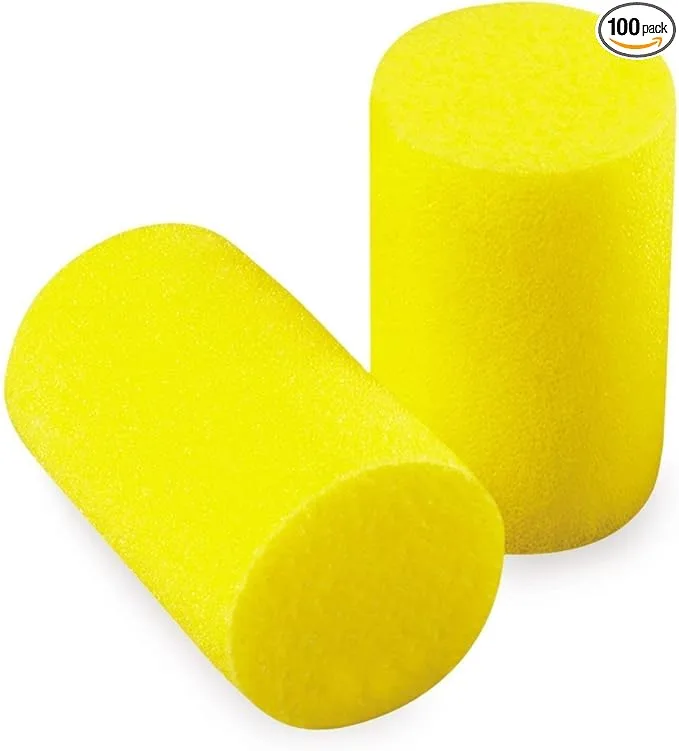
- 3M Classic Foam Earplugs (SNR ~28 dB) – Simple disposable plugs, more than enough for lighter tools.
- Moldex Spark Plugs Foam Earplugs (SNR ~35 dB) – Comfortable, colourful plugs, ideal for occasional DIY use.
Medium‑Noise Tools (Mitre Saw ~95 dB → Needs SNR ≈ 20 dB)
- 3M Peltor Optime I Ear Defenders (SNR ~27 dB) – Lightweight, comfortable, suitable for woodworking. Widely available on Amazon UK.
- Howard Leight Leightning L1 Ear Defenders (SNR ~25 dB) – Compact design, good for DIY and workshop use.
High‑Noise Tools (Angle Grinder ~105 dB → Needs SNR ≈ 30 dB)
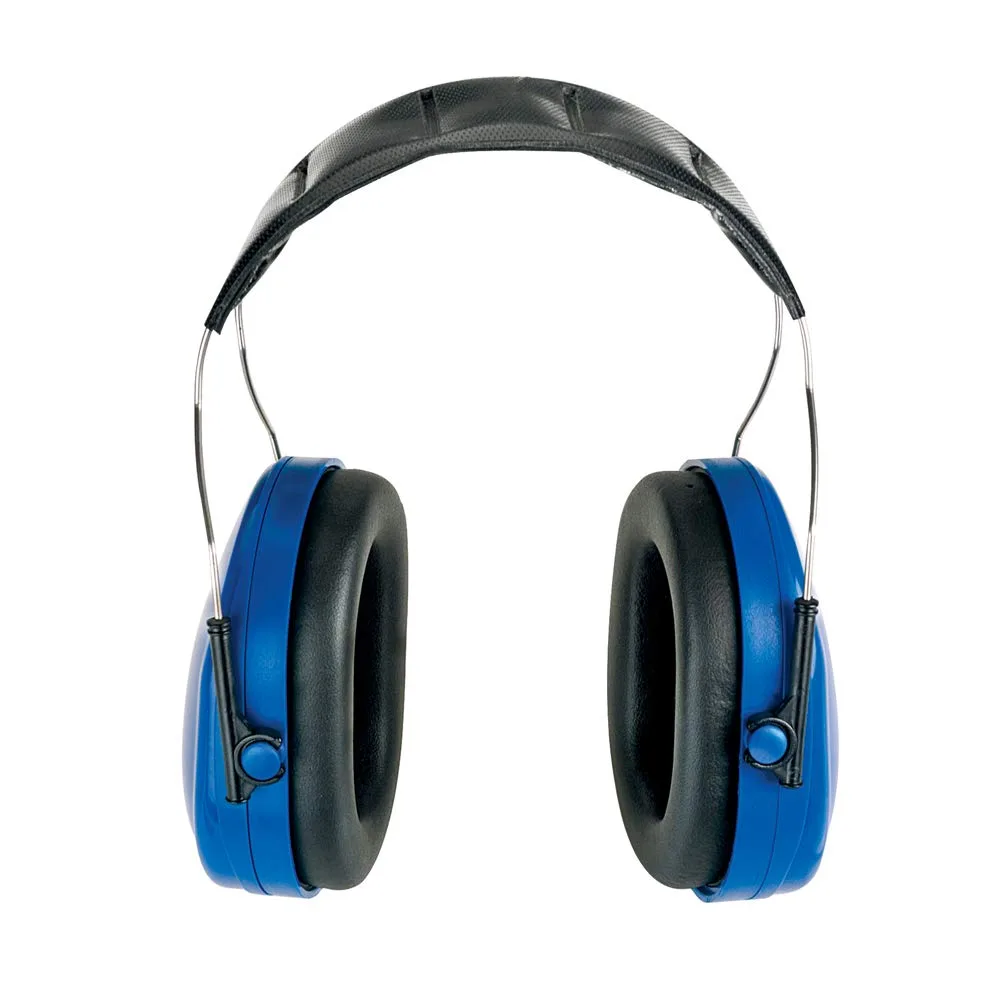
- JSP Classic® Extreme Ear Defender (SNR 30) – Headband style, durable ABS cups, soft foam cushions. Price: £25.53 (eBay UK).
- Centurion Light Sana Helmet Mounted Ear Defenders (SNR 30) – Helmet‑mounted option for industrial use. Price: £29.96 (UK Office Direct).
- Protear Bluetooth Ear Defenders with FM/DAB Radio (SNR 30) – Adds Bluetooth and radio functionality. Price: £99.07 (eBay UK).
- Silverline Folding Ear Defenders (SNR 30) – Lightweight, rigid cup design. Price: £34.06 (OnBuy.com).
Safety and Maintenance
The effectiveness of any hearing protection depends on fit. Even the highest SNR rating will fail if ear defenders or plugs are worn incorrectly. For earmuffs, ensure the cushions fully seal around the ear with no gaps caused by glasses, hair, or helmet straps.
For foam earplugs, roll them tightly, insert deeply into the ear canal, and allow them to expand to form a snug seal. A poor fit can reduce attenuation by more than 50%, leaving your ears exposed to dangerous noise levels.
Care and replacement are equally important. Foam inserts and seals degrade over time, losing their ability to block sound effectively. As a rule of thumb:
- Disposable foam earplugs should be replaced after each use.
- Reusable plugs should be cleaned regularly and replaced every few weeks, depending on wear.
- Earmuff cushions/seals should be checked for cracks, hardening, or loss of flexibility, and replaced every 6 months to 1 year in regular use.
Keeping your PPE clean and in good condition not only ensures the advertised SNR rating remains accurate but also improves comfort and hygiene.
Finally, hearing protection should be part of a wider safety routine. Before using any tool, carry out a pre‑use visual inspection of your PPE as part of the 5‑Point Tool Safety Checklist. This ensures that your equipment, from ear defenders to safety glasses, is fit for purpose and ready to protect you when it matters most.
Summary
Hearing loss is permanent, cumulative, and entirely preventable. The UK’s noise regulations make it clear: once you cross the 85 dB threshold, protection is not optional, it is mandatory. Whether you are a professional tradesperson or a DIY enthusiast, investing in proper hearing protection today is a small step that prevents a lifetime of irreversible damage tomorrow.
Think of it this way. The cost of a quality pair of electronic ear defenders is negligible compared to the personal and professional impact of hearing loss. Protecting your ears means protecting your career, your hobbies, and your everyday quality of life.
Protect Your Hearing Today – Best Overall Electronic Ear Defender
Don’t wait until it’s too late. The UK’s noise regulations make clear that once you cross 85 dB, hearing protection is mandatory. Our recommended Best Overall Electronic Ear Defender combines comfort, advanced noise reduction, and smart features to keep your hearing safe whether you’re on site or in your shed.