

The good old fashioned mitre box has been used for many years in UK homes up and down the country. Mitre boxes are a classic DIY tool—perfect for making angled cuts without the need for a powered saw.
Whether you’re fitting skirting boards, trimming coving, or working with metal, this guide compares the best mitre boxes available in the UK, grouped by task and budget.
“Over the years I have used various types of mitre boxes. They are a cheaper option to go for than having to buy a mitre saw. We find them useful for a few small cuts rather than setting up a full blown mitre saw. They are not made to last though, so good for a short time, and certainly get the job done.”
One simple way of reducing the amount of damage to any mitre box is to line the bottom of the box with an old piece of plywood. Doing just that one thing will greatly reduce the amount of damage that can be caused. As a general rule though these boxes are far from ideal to work with when compared to using a powered up mitre saw.
With a mitre box you have to do all the sawing yourself, find some way of keeping the mitre box in place, and trying really hard to keep the saw in place without it falling out of the slots. If you only have to do a few joints then you can live with the hassle. If you plan on doing some serious work then don’t buy one of these.
Top Picks
Use Case | Recommended Mitre Box |
|---|---|
Budget DIY | |
Skirting Boards | |
Coving & Cornice | |
Metal Cutting | |
Precision Work |
Draper 48677 Mini Mitre Box
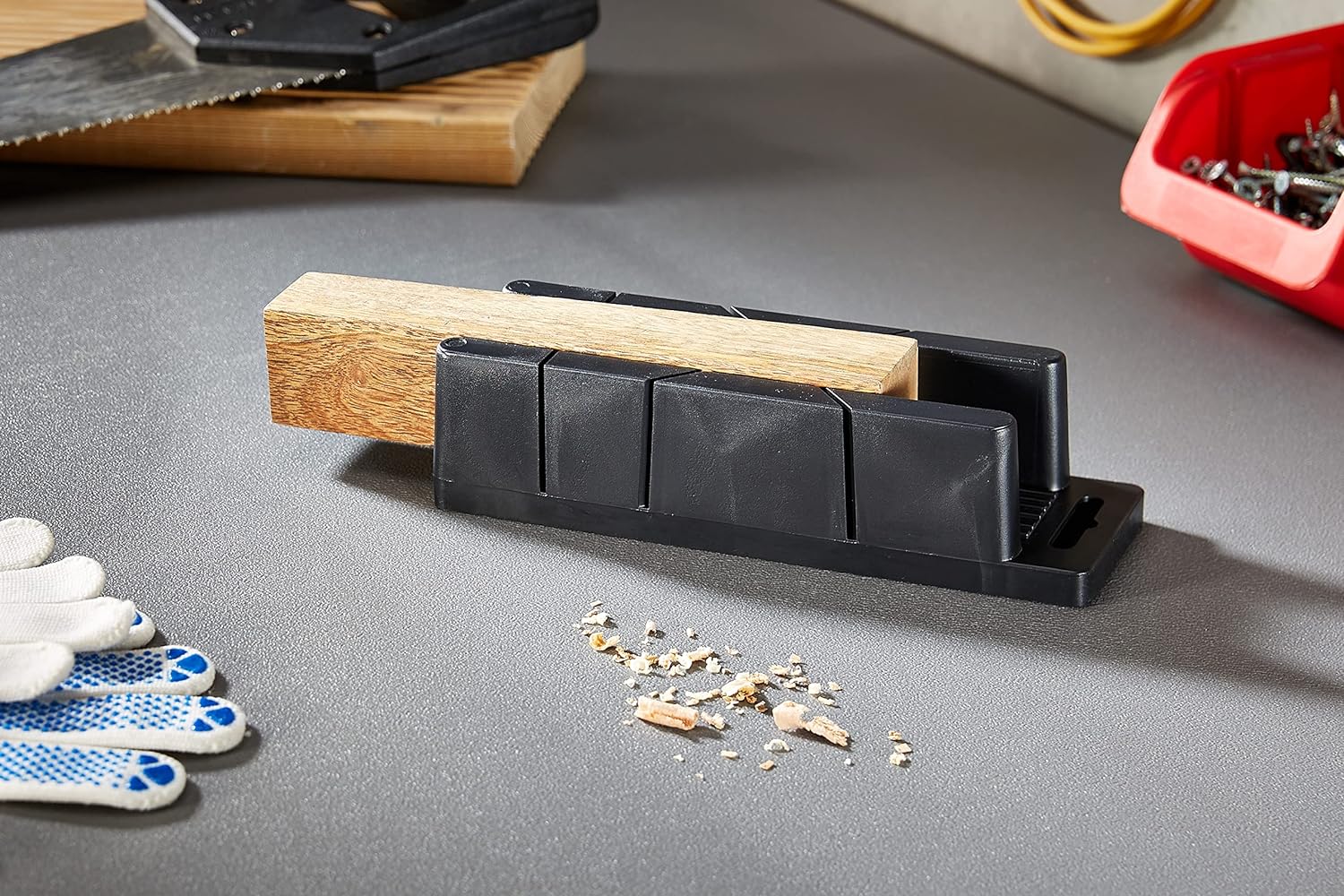
This is the best seller in the UK from the UK Draper brand and also the cheapest that we could find. It measures 200mm x 35mm x 50mm and weighs 120 grams and is made from recycled plastic.
It has two 45° and one 90° guide on both edges and two countersunk holes that allow you to fix it to a workbench.
It is a good choice for for small scale or precision work including model making etc.
It is no good for cutting anything over 2″ as it is a small mini box.
Check availability at Amazon UK.
Wolfcraft Large Mitre Box for Skirting Boards
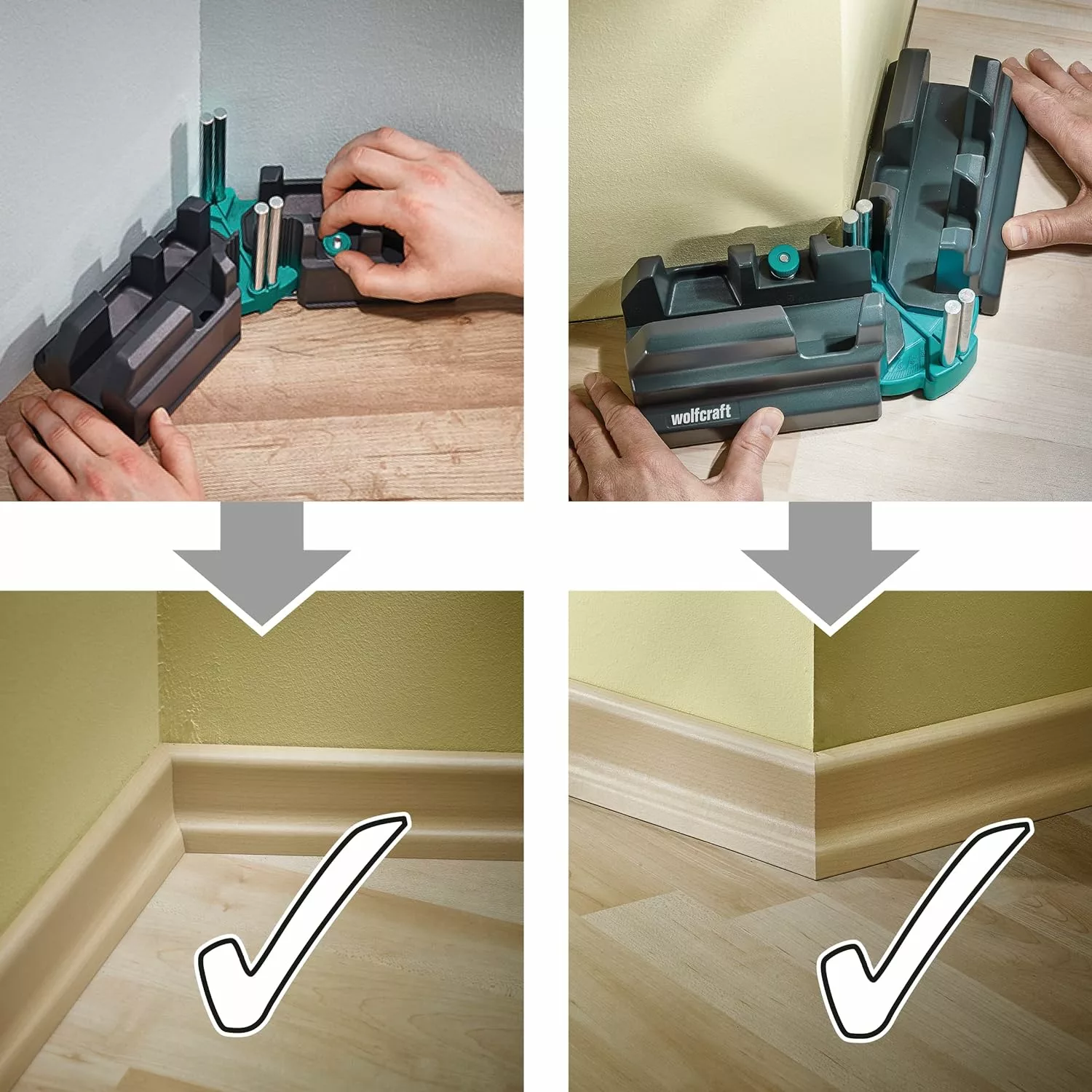
This is a 2 in 1 steel mitre box that has an angle bisector for cutting skirting boards up to 100 mm high.
As you can see from the image above it helps make perfect mitre angles for the corners of a room.
The bevel gauge makes it easy to measure and define angles from 85° to 180°.
It also has integrated guiding pins for the handsaw that automatically transfer the correct angle to the saw, with no margin for error.
The result is correct mitre cutting, regardless of the size of the angle, guaranteed.
Draper 55076 Mega Mitre Box

We have already shown the mini Draper mitre box and this is the larger version, and it measures 325mm x 180mm x 60mm.
The base has two countersunk slots for fixing to a bench.
It has one 45°, 60° and 90° guide on both edges.
It has been designed for the cutting of most sizes of coving, skirting boards etc.
Firstinfo Metal Mitre Box
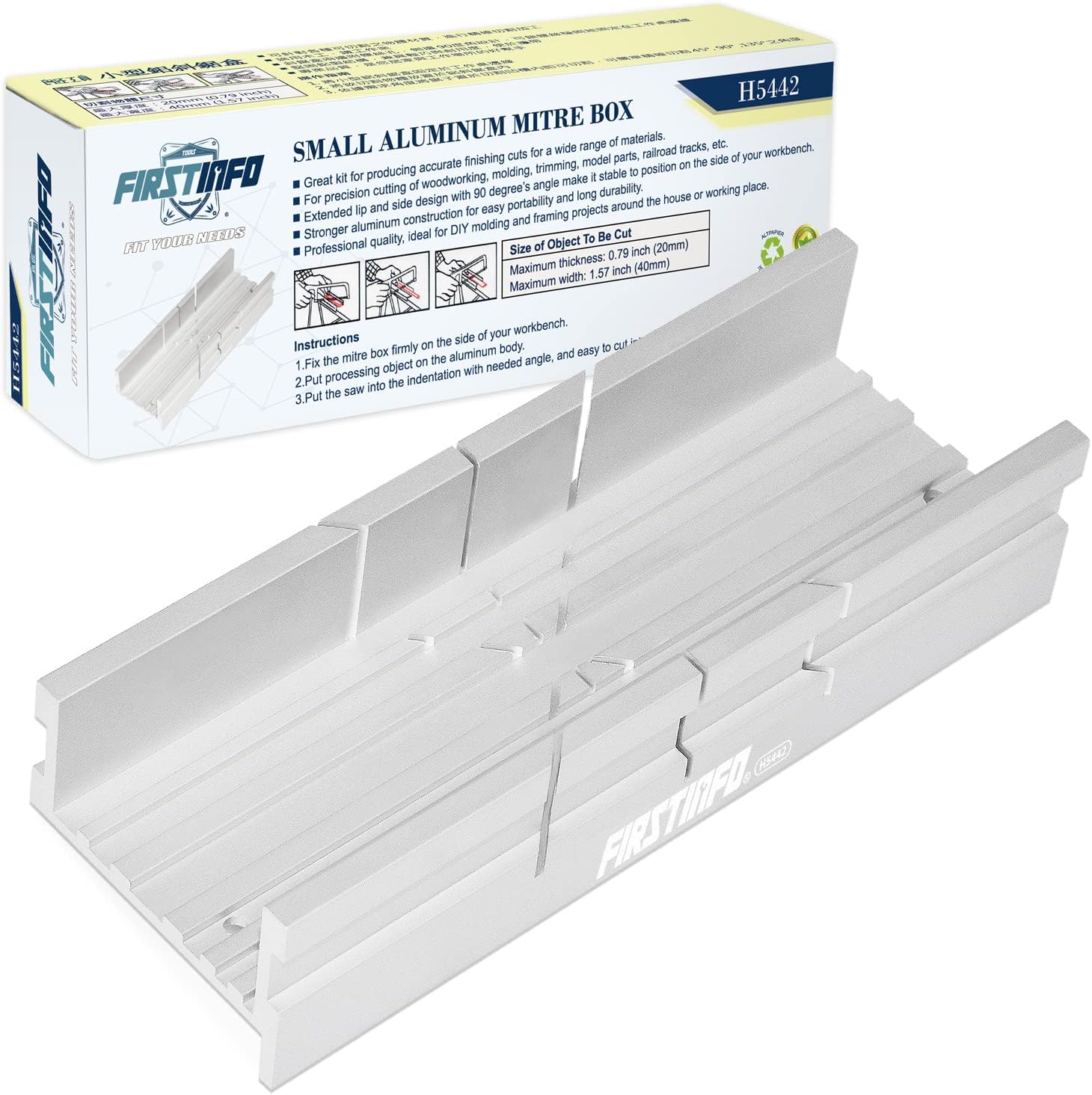
Most mitre boxes are made of plastic, but there are metal options such as this one shown here, which is made from aluminium.
This box can handle thicknesses up to 2 inch (50.8mm) and widths up to 3 inch (76.2mm)
Angles available are 45°, 90° & 135°
It has an extended lip which allows you to secure this to a workbench if you need to do that (suitable for 5 mm bolts)
Best used with a hacksaw as the gap is fine at only 1.2 mm
Mitre Box Buying Guide
What Saw To Use With A Mitre Box?
In the perfect woodworking world, you would use a tenon saw. This is a short saw with very fine teeth and is great for precision cutting. This is also often referred to as a back saw. It leaves a very nice smooth edge. These types of saws cost around £10.
If you don’t have one, you can just use an ordinary hand saw, but just don’t expect a really smooth edge when finished. You can of course use a bit of sandpaper to help make it smoother. The main purpose of using a tenon saw is that it cuts on the back movement, and that is perfect when using with a mitre box.
Size of the Mitre Box
These boxes are available in different sizes. You need to be careful when buying one as the size you buy will need to be able to fit the width of the piece of wood that you are trying to cut. Some typical sizes are:
- 200 x 35 x 50 mm
- 290 x 58 x 56 mm
- 320 x 102 x 102 mm
- 325 x 180 x 60 mm
- 360 x 165 x 90 mm
The length of the box is not that terribly important. The depth and width are the two most important sizes. The wood fits inside the box, and using the slots, you can then either make a basic cross cut, or your angled cut. Our best advice is always to buy the biggest and that way, you can be sure it will allow you to cut most common sizes of wood.
Cutting Angles on a Mitre Box
You will find that these will have a straight cross cut 90 degree angle slot. They will also have a 45 degree angle slot to the left and also one to the right. You can also buy some of these with 22.5 degree slots but these can be hard to find. The Stanley model does have that option.
Clamps on a Mitre Box
Most mitre boxes can be attached to a work bench or clamped to a table or a bench. Some of the boxes will come with clamps for holding the piece of wood you are sawing. We have yet to find a really good version of these as typically the clamps are really flimsy. It is much better to buy some wood clamps and do the job properly.
If you have a “Workmate” or something similar, then these boxes can be attached to these so as you have a solid foundation to work on. Some of the boxes also come with pre-drilled holes so as they can be screwed down to a bench. The problem with that though is that they take up room, and you may not want to have that in a permanent position.
Some people screw the mitre box to an old piece of wood, and then use a grip pad on their bench to hold it in place. We don’t think that this works that well, but if you are only doing a few cuts, it will help in the short term.
Mitre Box Problems
These type of boxes do get damaged. The reason is pretty simple. If you are placing wood inside a box, and then using a saw to cut through the provided slots, the saw will slip now and then, and you do have to saw right through the wood so the base of the box will be in contact with the teeth of the saw.
- They are not 100% accurate but to be honest, they are accurate enough for most uses.
- They do need to be secured to something so as you have a stable platform on which to work.
Mitre Box Alternatives
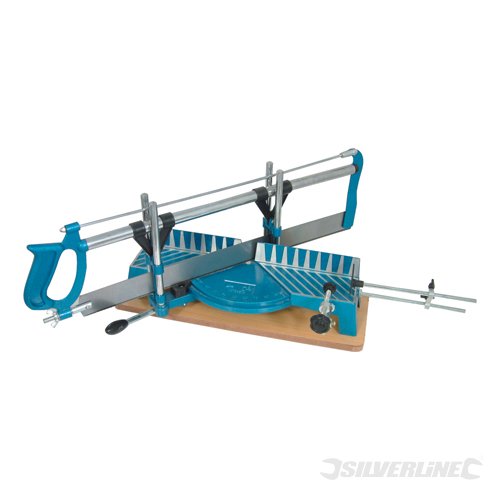
Another alternative to using a hand saw and a mitre box is to use what is termed a hand precision saw. These can be quite useful if you plan on doing a fair amount of work.
They are slightly more expensive than the standard mitre box. The benefit of using one of these, is that the saw is designed with nice fine teeth. That gives you a very precise and neat cut, which does make a great finish. The disadvantage of these is that they are a pain in the rear to store, as they take up quit a bit of room
The ultimate solution is to buy a power mitre saw. That said these do cost around £50-100 so only buy one if you really need it. Say for example you had planned to work in many rooms in your home, then a power mitre saw is worth considering.

You can read more here about alternative mitre saw options.
My Final Thoughts
A mitre box is just a useful tool to have for general DIY. They are not expensive and can make accurate cutting of mitre joints and bevel joints a very simple thing to achieve. You can buy these online or at Screwfix, Wickes etc. Generally speaking these are made from plastic and are a good choice for one-off projects. They don’t last forever but given that they are not expensive, they will get the job done and you can buy a new one when you need it for another bigger project.
If you prefer you can also buy a metal one which will last longer.
FAQ
How accurate is a mitre box?
The better quality mitre boxes such as Stanley and Firstfix are accurate. Just be aware though, that over time, the angled slots do get wore away by the use of the saw. That can eventually lead to some play and that decreases accuracy. With the plastic or wooden boxes that tend to happen more than a metal box.
What’s the best choice of mitre box for DIYers?
I would recommend the Stanley clamping mitre box for DIYers. It is affordable, accurate and will not let you down. For general DIY this one is a very good choice, as it has a range of angles, the saw makes fine cuts and it will last longer than most.
What type of blade do you need for a mitre box?
Some mitre boxes come with a box and blade. Those are designed to fit the box so will work best. If you just own the box, then a tenon saw works best. Some users who own a Japanese saw use that which is a great choice. You can use a standard hand saw but you would need to check if the blade is thin enough, otherwise it will damage the box.
Mitre boxes are ideal for quick angled cuts without setting up a full saw. Whether you’re fitting coving or trimming skirting boards, choosing the right box saves time and frustration.