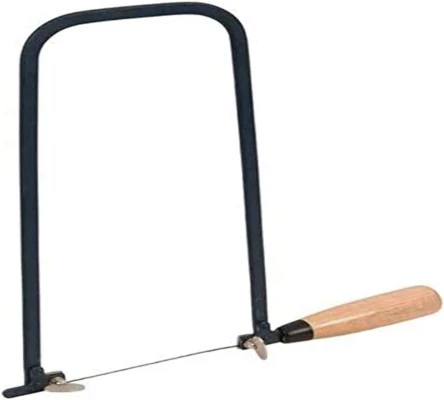
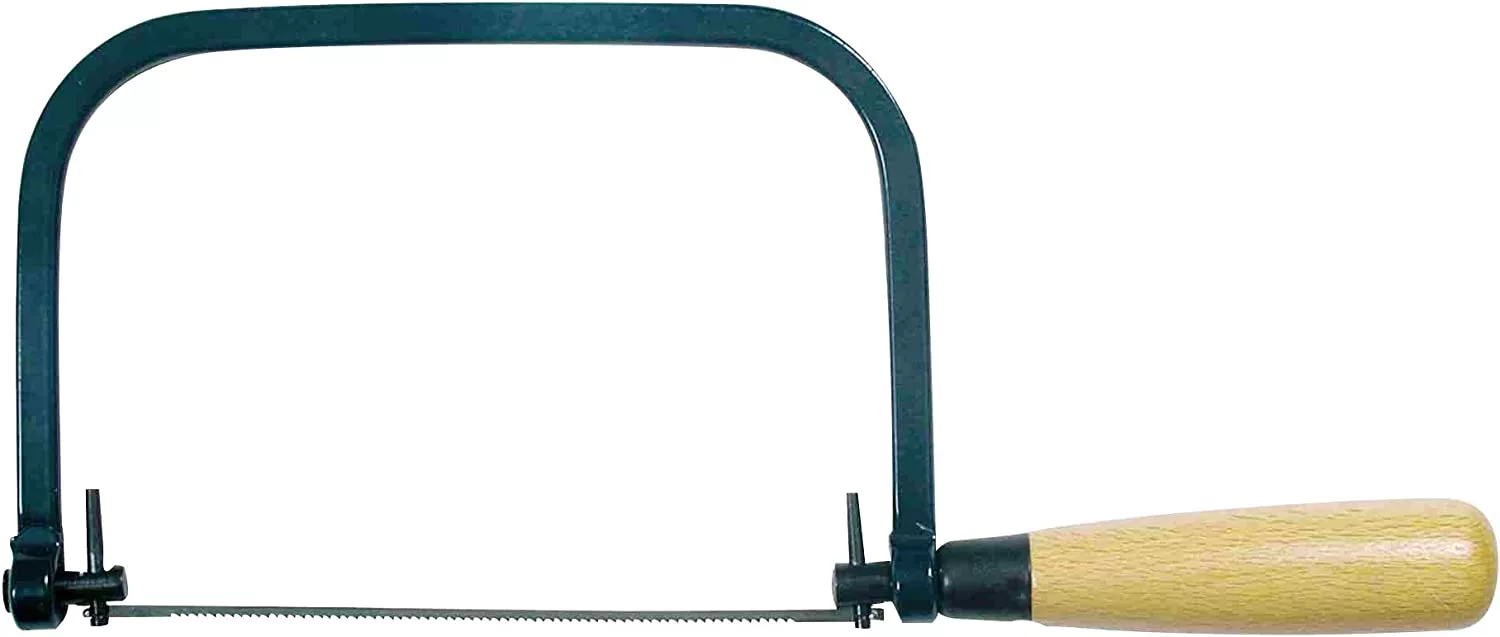
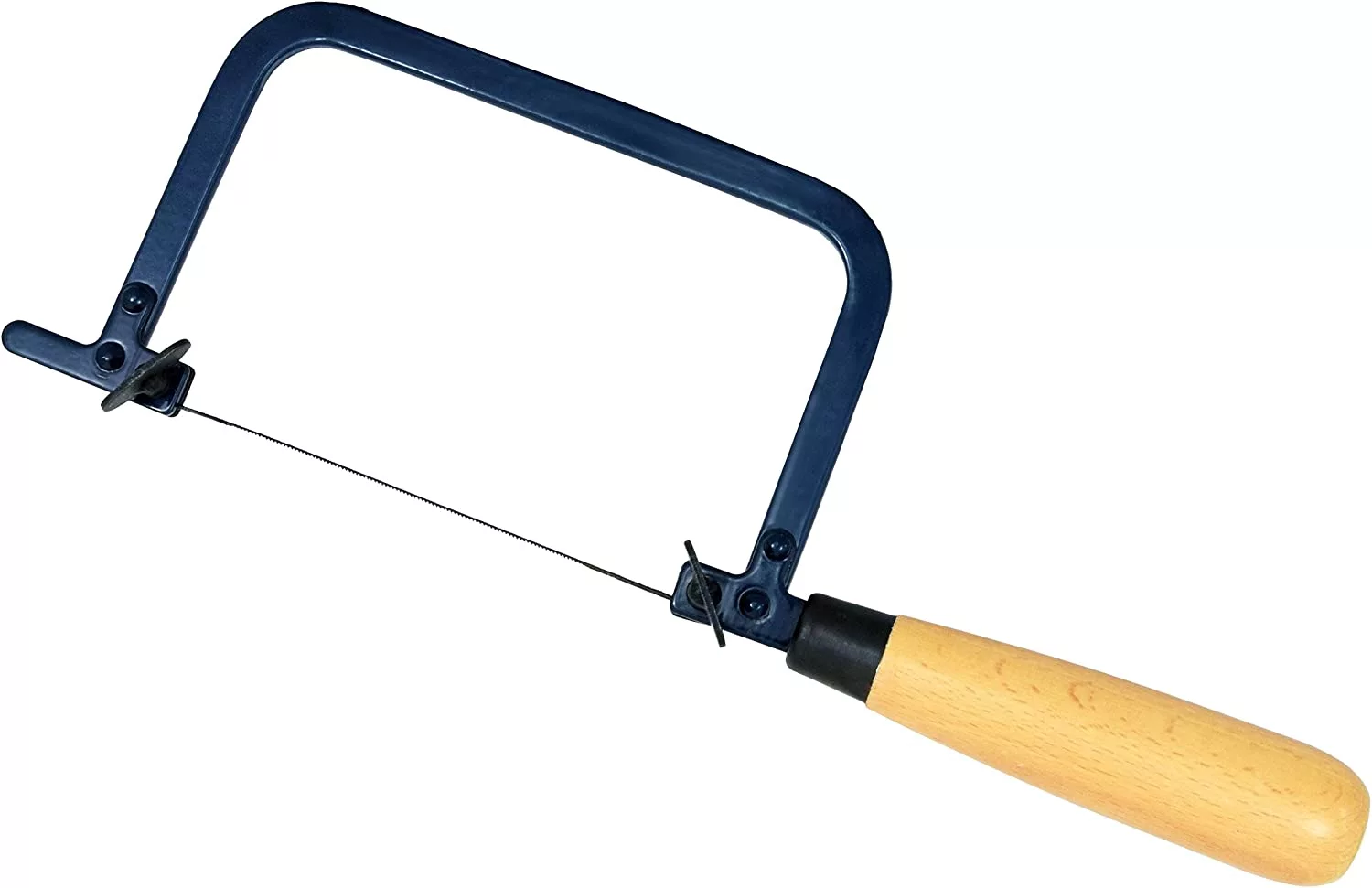
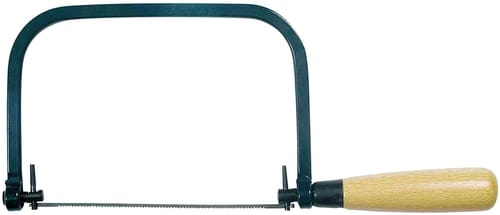
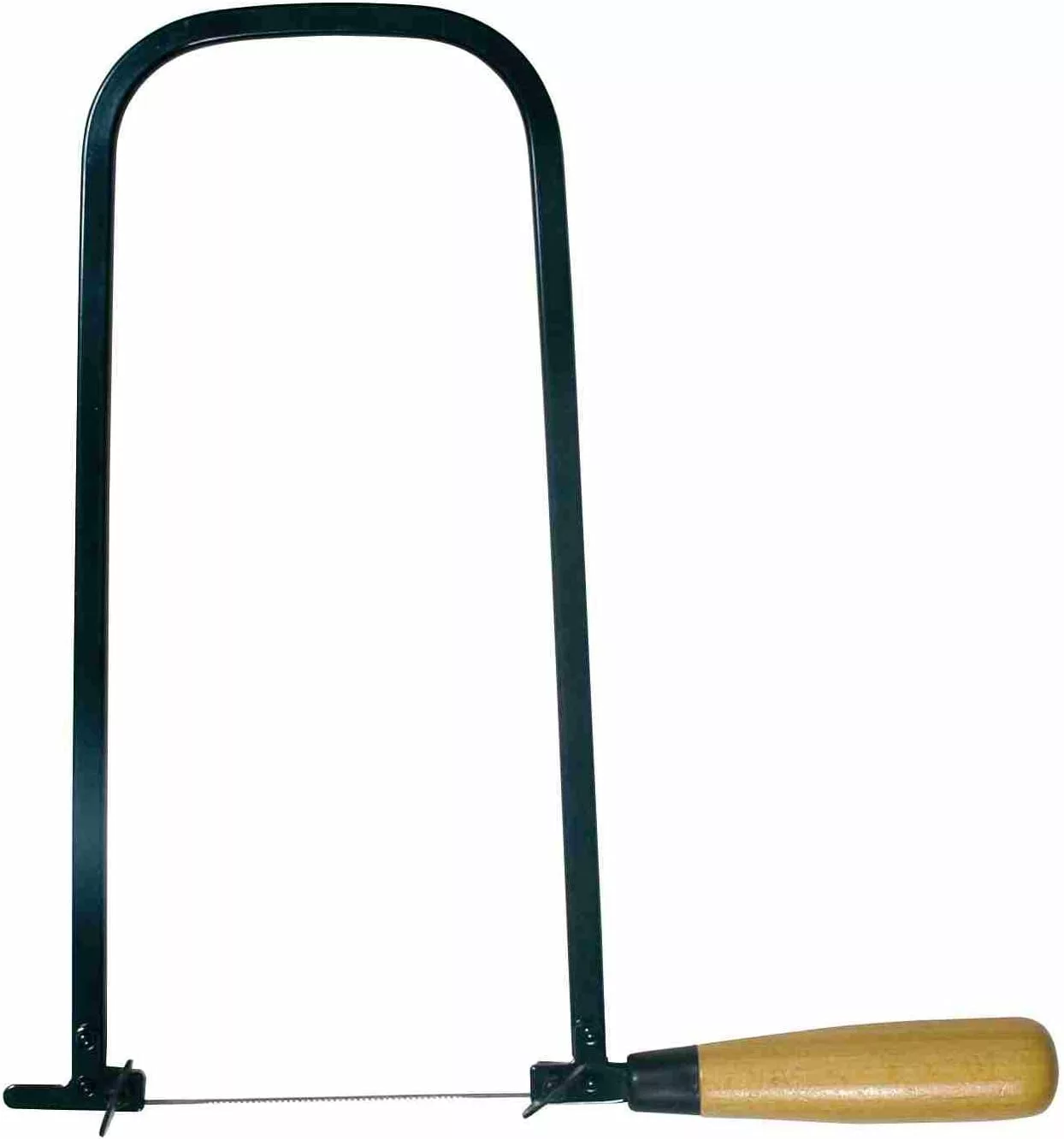
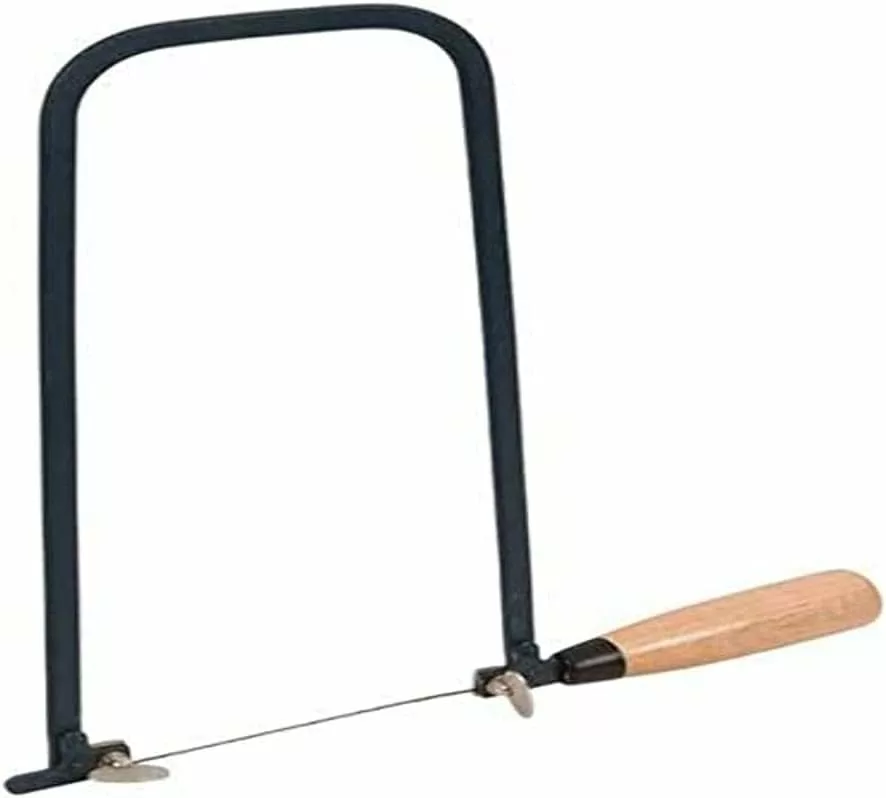
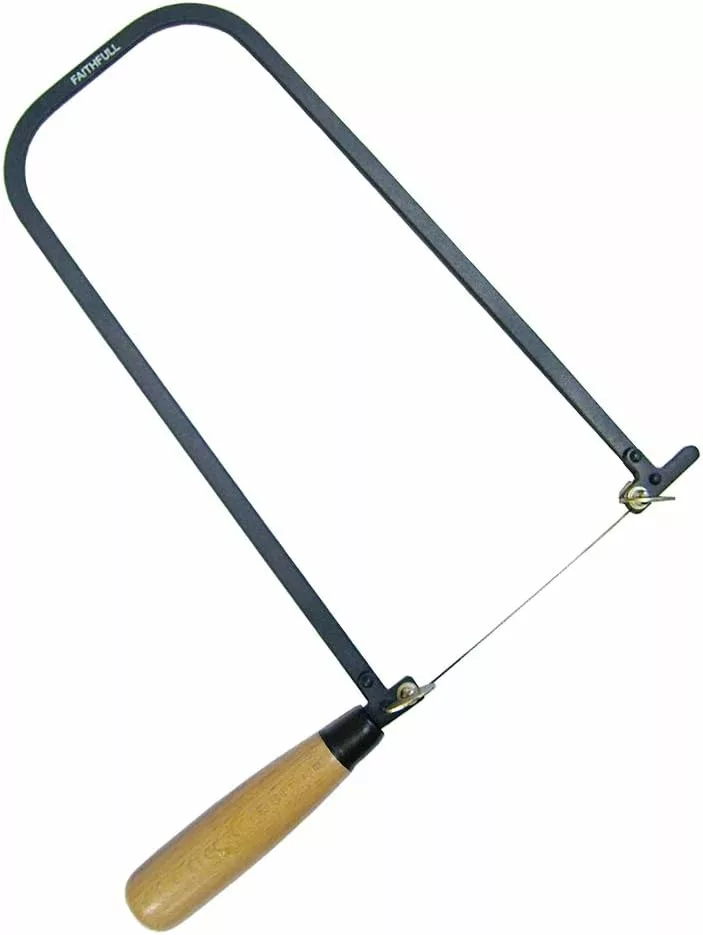
When it comes to delicate, intricate woodwork, few tools match the precision of a fret saw. Whether you’re crafting tight curves, decorative details, or miniature joints, choosing the right fret saw can make all the difference. In this guide, we’ll cover what fret saws are used for, how they differ from similar tools, and which models offer the best value in the UK right now.
Often confused with coping saws, fret saws feature a thinner blade (around 13 cm) and a deep frame (25–51 cm) that allows for tighter turns and finer cuts. That slender kerf is what makes them ideal for detailed scrollwork, puzzle pieces, and even some types of dovetail joinery.
You’ll find them most commonly in woodworking shops and model-making circles—but they’re equally handy for crafters and DIYers looking for affordable, manual precision. With UK prices typically between £10 and £20, fret saws offer a cost-effective alternative to scroll saws, which often run £100–£150.It’s easy to see why there’s confusion: fret saws, coping saws, and even piercing or jeweller’s saws share similar shapes. The key differences lie in the blade thickness, frame depth, and flexibility. While the pros know the difference instinctively, this guide breaks it down clearly for beginners and hobbyists alike.
Fret Saw vs Coping Saw vs Piercing Saw: What’s the Difference?
Saw Type
Best For
Blade Type
Frame Depth
Typical Use
Fret Saw
Intricate, delicate cuts
Ultra thin, fine toothed
Deep (25-51cm)
Scrollwork, marquetry and fine woodworking
Coping Saw
Curved cuts in wood or plastic
Thicker pinned blade
Shallow
Skirting boards, mouldings, cope joints
Piercing Saw
Ultra fine metal or jewellery work
Very fine jeweller’s blade
Small and rigid
Cutting metal, jewellery and fine detailing
Fret Saw
Coping Saw
Piercing Saw
Quick Tip
Fret saws cut on the pull stroke and excel at deep, delicate cuts in thin wood.
Coping saws are more robust and better for general curved cuts.
Piercing saws are essentially jeweller’s saws—ideal for metal and ultra-fine detail.
Top 7 Best Fret Saws (UK 2026)
Just below you can find our recommendations.
Quick Summary
Category
Our Pick
Why It Stands Out
Best Overall
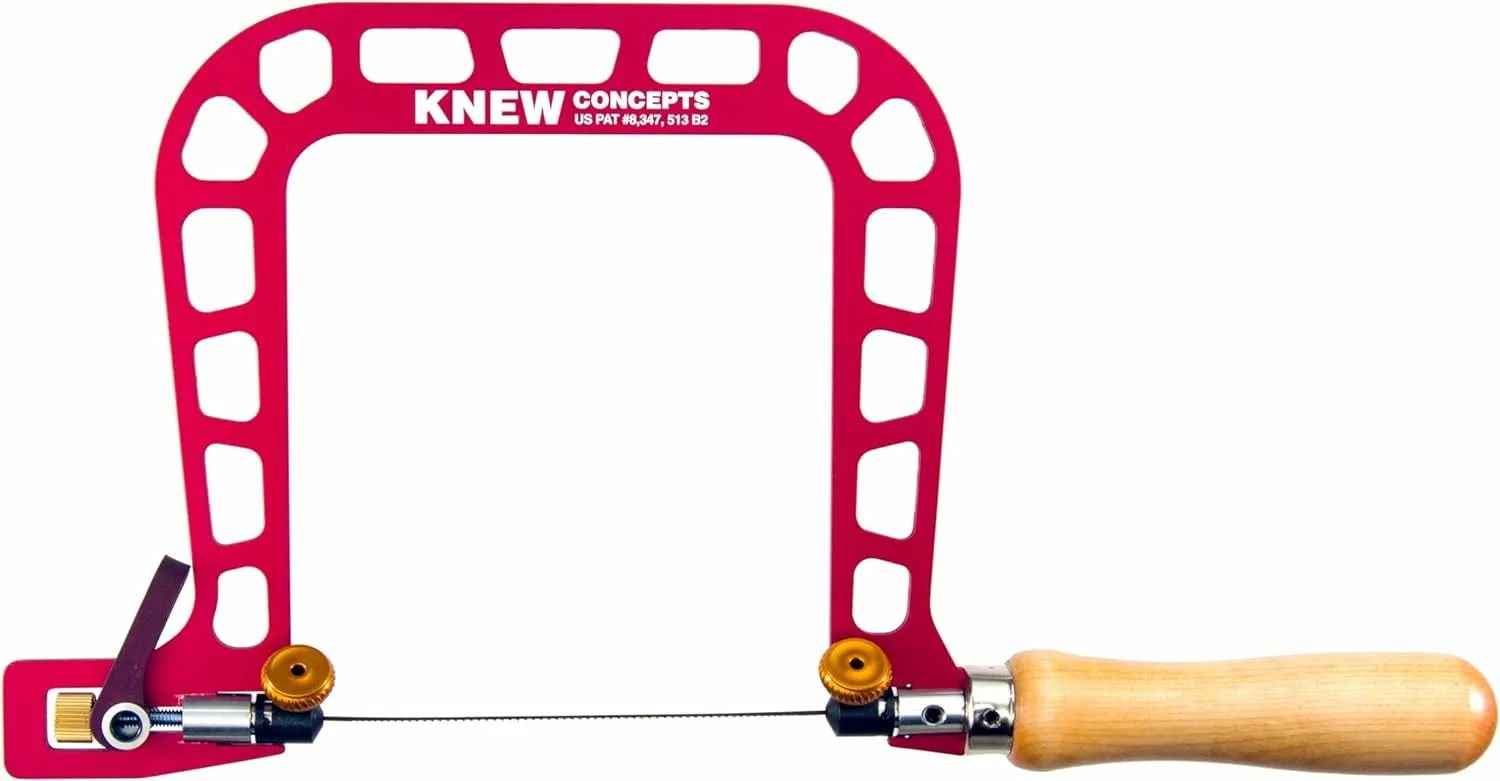
Knew Concepts 5″ Woodworker
Ultra-lightweight, rigid frame, cam lever tensioning – ideal for serious scrollwork.
Best Budget
Silverline 453456 Fretsaw
Affordable, simple and surprisingly capable for light duty DIY and hobby use
Best for Beginners
Eclipse 70-FS1R Fret Saw
Comfortable grip, easy blade changes, and great balance for first time users
Fret Saw Comparison Table (UK 2026)
Saw
Frame Depth
Blade Tension
Best For
Approx Price
Knew Concepts 5″ Woodowrker
5″ (127mm)
Lever and swivel clamp
High precision scrollwork
£100-110
Eclipse 70-CP1R Coping Saw
165 mm
Handle twist tension
General curved cuts in wood
£10-£14
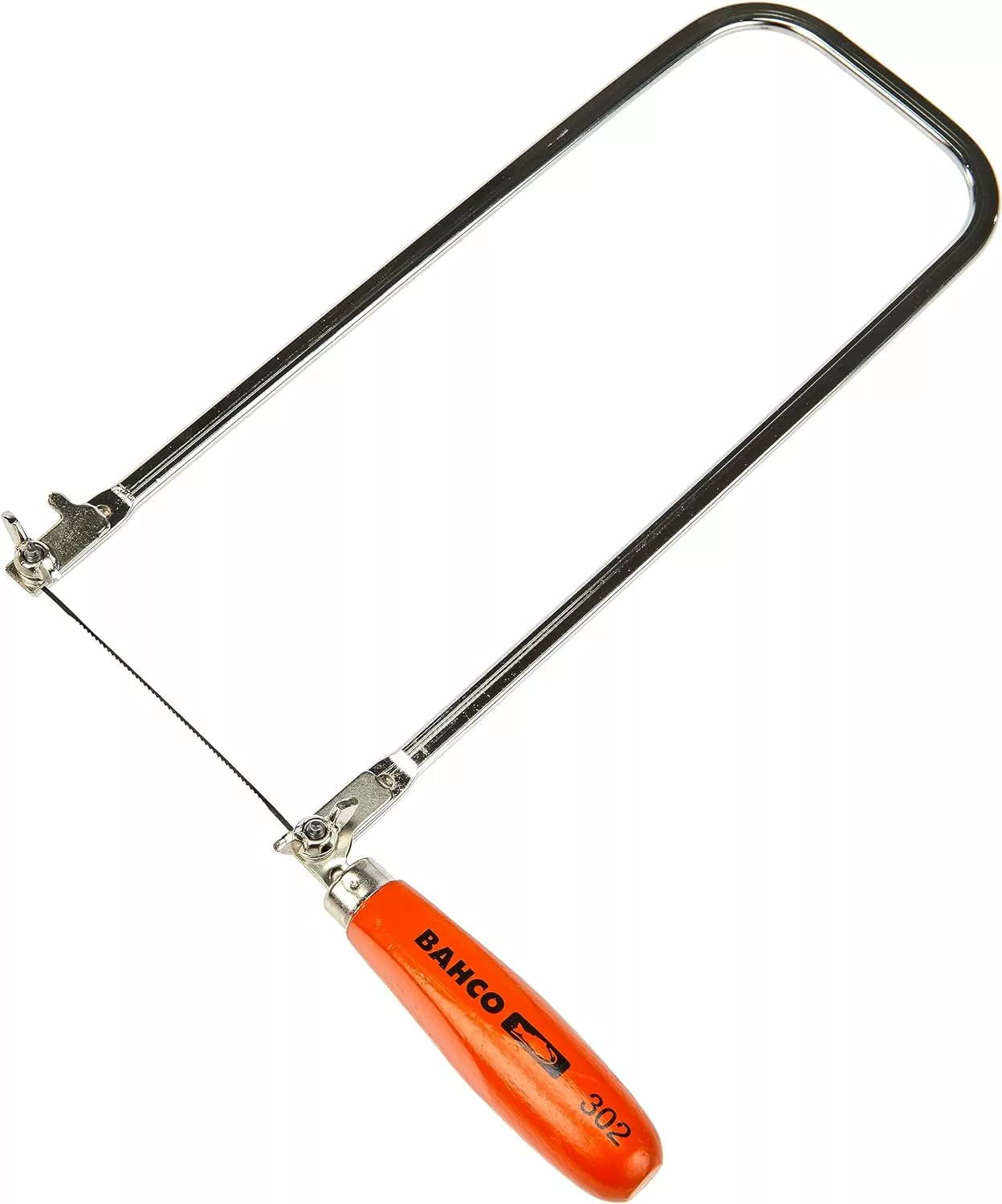
Bahco 302 Fret Saw
308 mm
Fixed Pin
Traditional fretwork
£103-£17
Bahco 502 Fret Saw
300 mm
Screw clamp
Deep cuts in wood or plastic
£15-£18
Eclipse 70-FS1R Coping Saw
285 mm
Handle twist tension
Fine cuts in wood, plastics or bone
£15-£17
Silverline 453456 Fret Saw
300 mm
Basic clamp
Budget friendly light duty work
£11-£13
Faithfull Fretsaw
290 mm
Blade clamp (plain end)
General curved cuts in wood
£13-£14
No 1 – Knew Concepts 5 Inches Woodworker Fret Saw
Quick Verdict: – The premium choice for serious woodworkers—ultra-light, ultra-precise, and built like a race car.
Specification: –
Frame Depth: 127 mm (5″)
Tensioning: Lever + swivel clamp
Blade Type: Plain-end, skip-tooth #7
Weight: 147 g
Pros
Aircraft-grade aluminium frame—rigid but featherlight
Cam-lever tensioning for fast, repeatable blade swaps
Swivel blade clamps for angled cuts in tight spots
Cons
Pricey for casual users
May be overkill for basic DIY tasks
No 2 – Eclipse 70-CP1R Coping Saw
Quick Verdict: – Technically a coping saw, but a great budget-friendly option for curved cuts and general fretwork.
Specification: –
Frame Depth: 165 mm
Tensioning: Handle twist
Blade Type: Pinned
Handle: Traditional Wood
Pros
360° blade rotation for angled cuts
Comfortable grip and solid steel frame
Excellent value for under £15
Cons
Not a true fret saw—less precise for fine scrollwork
Quick Verdict: – A classic, no-frills fret saw with a deep frame and solid build—great for traditional woodworking.
Specification: –
Frame Depth: 308 mm
Tensioning: Fixed pin
Blade Type: Plain end
Handle: Lacquered beechwood
Pros
Deep throat for long reach cuts
Durable plated steel frame
Comfortable wooden handle
Cons
Blade changes require a bit of fiddling
No quick-tensioning mechanism
No 4 – Bahco 502 Fretsaw
Quick Verdict: – A deep-frame, no-nonsense fret saw with a solid steel build—great for traditional woodworking and long reach cuts.
Specification: –
Frame Depth: 300 mm
Tensioning: Screw clamp
Blade Type: Plain end
Handle: Hardwood
Pros
Chrome-plated steel frame for durability
Deep throat for wide material access
Comfortable wooden handle with good grip
Cons
Comes with 6 blades
Blade changes take a bit of effort
No 5 – Eclipse Fret Saw 70-FS1R
Quick Verdict: – A reliable all-rounder with a deep frame and smooth handling—ideal for beginners and hobbyists alike.
Specification: –
Frame Depth: 285 mm
Tensioning: Handle twist
Blade Type: Plain end
Handle: Traditional wood
Pros
Great balance and control
Cuts wood, bone, and plastics with ease
Trusted UK brand with solid build quality
Cons
No quick-release mechanism
Slightly heavier than some budget models
No 6 – Silverline 453456 Fretsaw
Quick Verdict: – A budget-friendly fret saw with a deep frame—perfect for light-duty DIY and craft projects.
Specification: –
Frame Depth: 300 mm
Tensioning: Basic clamp
Blade Type: Plain end
Handle: Wooden
Pros
Very affordable
Lightweight and easy to handle
Ideal for occasional use or beginners
Cons
Basic tensioning system
Not as durable for heavy use
No 7 – Faithfull Fretsaw
Quick Verdict: – A dependable, deep-frame saw from a trusted UK brand—great for precision work on wood and light materials.
Specification: –
Frame Depth: 290 mm
Tensioning: Blade clamp
Blade Type: Plain end
Handle: Wooden
Pros
Long reach for scrollwork and fine cuts
Compatible with standard 130 mm blades
Solid build and smooth cutting action
Cons
No quick-tensioning feature
Slightly heavier than some plastic-frame models
How to Choose the Right Fret Saw
Choosing the right fret saw isn’t just about price—it’s about matching the tool to your materials, your skill level, and the kind of cuts you want to make. Here’s what to consider before buying:
1. Frame Depth
The deeper the frame, the farther you can cut from the edge of your material.
Shallow frames (under 150 mm) are fine for small, edge-based cuts.
Deep frames (250–300+ mm) are better for scrollwork and long internal curves.
Tip: If you’re working on marquetry, model making, or puzzle pieces, go deep.
2. Blade Tensioning Mechanism
A tight blade always means cleaner cuts and less breakage.
Lever or cam-lock systems (like on Knew Concepts) are fast and precise.
Twist handles or wing nuts are more common and affordable, but slower.
Fixed pins are simple but can be fiddly when changing blades.
3. Handle Comfort & Control
Look for a smooth, contoured grip—especially if you’ll be cutting for long periods.
Wooden handles offer warmth and control.
Plastic or rubber grips can reduce fatigue but may feel bulky.
4. Blade Type & Compatibility
Most fret saws use plain-end 130 mm blades, but always check before buying.
Some models only accept pinned blades.
Others allow blade rotation, which helps with angled or curved cuts.
Bonus: Look for saws that come with a blade set or accept standard jeweller’s blades.
5. Build Quality & Intended Use
Aluminium or steel frames offer better rigidity and accuracy.
Budget models are fine for occasional use, but may flex under pressure.
If you’re cutting hardwoods or metal, invest in a saw with strong tension and minimal flex.
Fret Saw Features Explained
Fret saws are not a general purpose DIY tool or something you will use everyday. Understanding the anatomy of a fret saw helps you choose the right one and use it with confidence. Here’s a breakdown of the key components and what they actually do:
There is also a bit of a learning curve required when you first start to use a fret saw. The high frame does make them unbalanced and getting control of that balance is important for doing intricate cuts.
We have included a diagram of a fret saw just below so as you can understand the various parts and why they are important.
The handle – All fret saws have a straight handle that is cylindrical in shape, and almost always made from wood. That is designed to make the saw comfortable to hold and use. The handle also prevents too much pressure being pushed down on to the saw, and that helps stop the delicate blades from breaking.
The frame – Most frames are made from a flexible alloy steel and usually quite a flat steel. There is a slight spring to the steel frame. The frames are usually coated with some type of protection such as chrome plating that helps prevent the frame from rusting.
The blade – Fret saws have a thin short blade, much thinner than a coping saw, and can make much tighter cuts. Most fret saw blades are 5″ long (130mm) and these blades are considered to be fragile. It is the biggest complaint about fret saws that blades break to easily. They are not designed for heavy duty cutting or for fast or rough cutting. Various blade types are available ranging between 14-48 teeth per inch. You can also buy blades suitable for cutting thin metal sheets.
Cutting stroke – All fret saws cut on the pull stroke, so important to remember that the teeth should be placed in the frame with the points facing back towards the handle. The teeth on a fret saw are small with shallow gullets, so they cut and remove less material with each stroke. That means that the cutting process takes longer but you can create more intricate shapes.
Blade Rotation & Internal Cuts – Some fret saws allow the blade to rotate, letting you cut at angles or in tight spaces. For internal cuts, drill a hole in your workpiece, thread the blade through, and reattach it to the frame. This is what makes fret saws ideal for pierced work, like marquetry or model making.
Maintenance Tips for Your Fret Saw
A well-maintained fret saw not only cuts cleaner—it lasts longer and feels better in the hand. Whether you’re a weekend hobbyist or a daily woodworker, these simple habits will keep your saw in top shape:
1. Keep the Blade Tension Just Right
Over-tightening can cause premature blade breakage, especially near the clamps.
Listen for a clear “ping” when plucked—too dull = loose, too sharp = overtight.
Avoid forcing the blade through tight curves; let it do the work.
2. Wipe Down After Use
Wood dust and resin can build up on the frame and blade.
Use a dry cloth or soft brush to clean the frame and handle.
For sticky residue, a dab of mineral spirits on a cloth works wonders.
3. Check Blade Clamps Regularly
Loose or misaligned clamps can cause blades to slip or snap.
Inspect for wear or distortion, especially if you’ve had breakages near the bottom clamp.
Don’t overtighten—just enough to hold the blade firmly.
4. Store It Safely
Avoid tossing your fret saw into a drawer with other tools.
Hang it on a pegboard or store it in a dedicated tool roll or rack.
Keep blades in a labelled container to prevent bending or rust.
5. Replace Blades Often
Even the best blades fatigue over time.
If cuts start to wander or feel rough, it’s time to swap.
Keep a variety of TPI (teeth per inch) blades on hand for different materials.
Fret Saw vs Scroll Saw: Which One Should You Choose?
Fret saws and scroll saws seem like cousins—both are designed for intricate, curved cuts. But they differ in power, precision, and practicality. Here’s how they stack up:
Feature
Fret Saw
Scroll Saw
Power Source
Manual (Hand Powered)
Electric (Plug in or pedal controlled)
Precision
High, but depends on user skill
Extremely high – great for repeatable intricate cuts
Blade Type
Thin, plain end (130mm)
Similar blades often interchangeable
Cutting Depth
Limited by frame (Typically 250-300mm)
Depends on throat size – often 400mm+
Speed & Control
Fully manual – great for slow careful work
Variable speed control for consistent results
Noise & Vibration
Silent and stable
Louder with some vibration (varies by model)
Portability
Lightweight and compact
Bulky – requires a bench or table
Price (UK)
£10-£20
£100-£150+
Best For
Hobbyists, model makers, fine woodworking
Professional scrollwork, marquetry and production work
Choose a fret saw if you want a low-cost, quiet, and portable tool for occasional or detailed handwork.
Choose a scroll saw if you need speed, consistency, and power for larger or more frequent projects.
“A fret saw is like a paintbrush—quiet, precise, and personal. A scroll saw is more like a sewing machine—fast, repeatable, and built for volume.”
Accessories & Spare Blades
1. Spare Blades (Plain End, 130mm)
Stock up on a variety of TPI (teeth per inch) blades for different materials:
15–18 TPI: General wood cutting
20–28 TPI: Fine scrollwork and hardwoods
30+ TPI: Plastics, bone, or thin metals
TOP UK Options
Faithfull 130 mm 18 TPI (Pack of 12)
Record Power Niqua Scroll Blades – Mixed Packs
Dremel Moto-Saw Blades (MS51–MS53)
Tip: Keep blades in a labelled case or magnetic strip to avoid bending.
2. Blade Lubricant (Beeswax or Candle Wax)
Rubbing your blade with beeswax reduces friction and heat, especially on hardwoods or metal. It also helps prevent blade breakage and gives a smoother feel.
3. Magnetic Blade Holder or Dispenser
Avoid rummaging through drawers—use a magnetic strip or blade dispenser to keep your blades organised and safe.
4. Mini Clamp or Bench Vice
Holding your workpiece steady is half the battle. A small bench clamp or vise makes fretwork more accurate and less frustrating.
5. Tool Roll or Storage Case
Protect your saw and blades with a soft tool roll or hard case—especially if you’re storing multiple saws or travelling between workshops.
Fret Saw FAQ
Final Verdict: Our Top Picks
Whether you’re a seasoned woodworker or just starting out with scrollwork and fine cuts, the right fret saw makes all the difference. Here’s a quick recap of our top recommendations:
Best Overall: Knew Concepts 5″ Woodworker – unmatched precision, featherlight frame, and pro-level tensioning. If you want the best, this is it.
Best Budget: Silverline 453456 Fretsaw – simple, affordable, and perfect for hobbyists or occasional use.
Best for Beginners: Eclipse 70-FS1R Fret Saw – smooth handling, easy blade changes, and great value from a trusted UK brand.
Each of these saws earned its place through a mix of build quality, usability, and real-world practicality. Whether you’re cutting dovetails, crafting models, or just exploring a new hobby, there’s a fret saw here that fits your needs—and your budget.