
If the DCD776 cordless drill is the “all-rounder” of the workshop, the DeWalt DCF787N is the specialist. It is a brushless impact driver designed for one thing: driving screws into wood or metal with zero effort.
If you have ever had a drill “kick back” and twist your wrist when a screw gets stuck, the DCF787N is the solution you’ve been looking for.
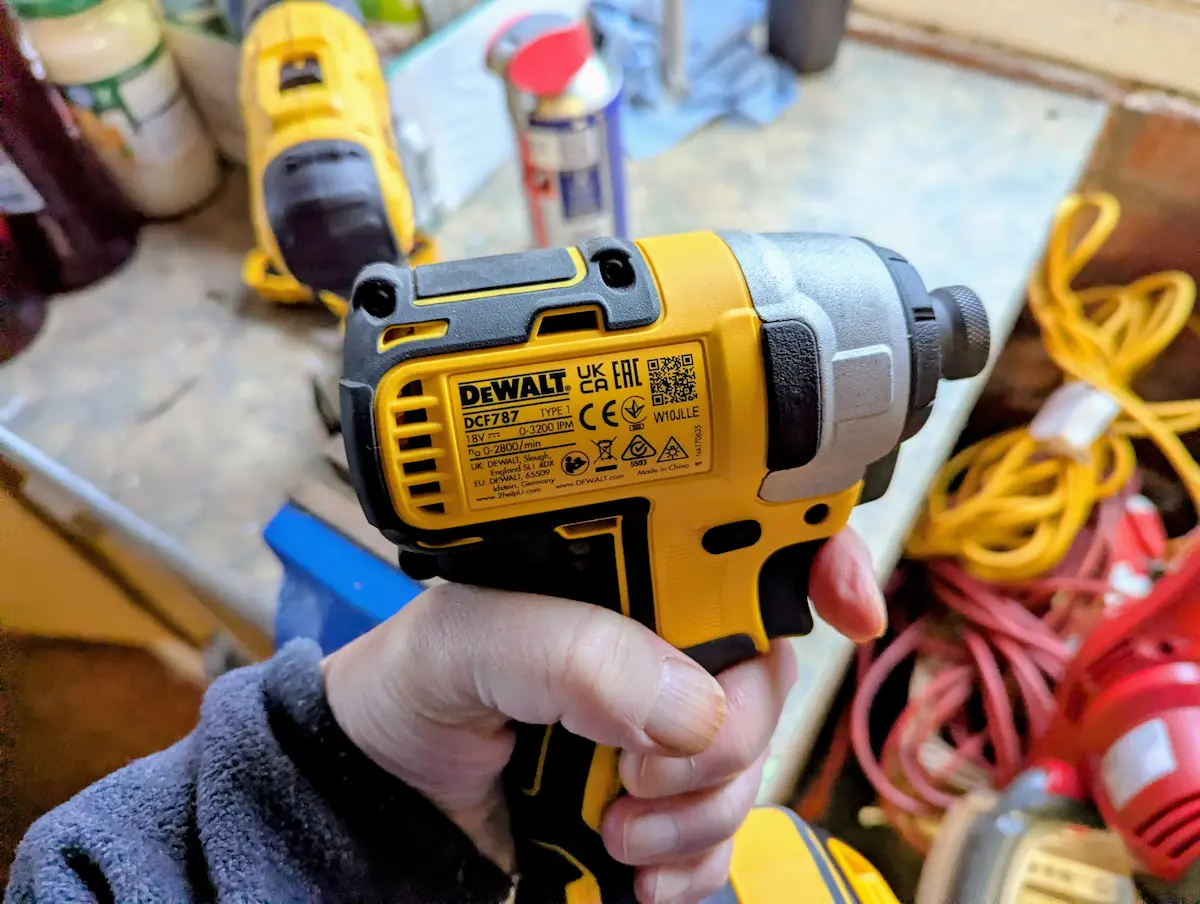
This is me holding my DCF787N on my small workbench in my garage.
The Brushless Advantage
Once you get to understand the letters that the DeWalt brand use, you will notice three letters, followed by 3 numbers. In this case the impact driver has a model number DCF787.
If you then see an “N” after like DCF787N, the “N” in the name usually means it’s a bare unit (no batteries). The same system applies to all DeWalt tools.
What is more important though is the real magic is the brushless motor.
Unlike older brushed models, this type of motor is more efficient, runs cooler, and most importantly, it is much shorter. This makes it perfect for getting into tight gaps under workbenches or inside kitchen cabinets. Essentially any are where space is restricted.
Impact Action vs. Standard Drilling
New users, that are used to the sound of a drill, often ask: “Why does the impact driver make that loud rattling noise?” That noise is the internal “hammer and anvil” mechanism.
Instead of a constant push (like your drill), the DCF787N delivers thousands of tiny “hits” per minute. This prevents the screwdriver bit from slipping out of the screw head (cam-out) and provides massive rotational force without twisting your arm.
Enda’s Tip: You do not need to lean your whole body weight against an impact driver. Let the tool do the “tapping.” If you push too hard, you actually make it more likely to snap the screw head off.
The 1/4″ Hex Chuck: Speed is King
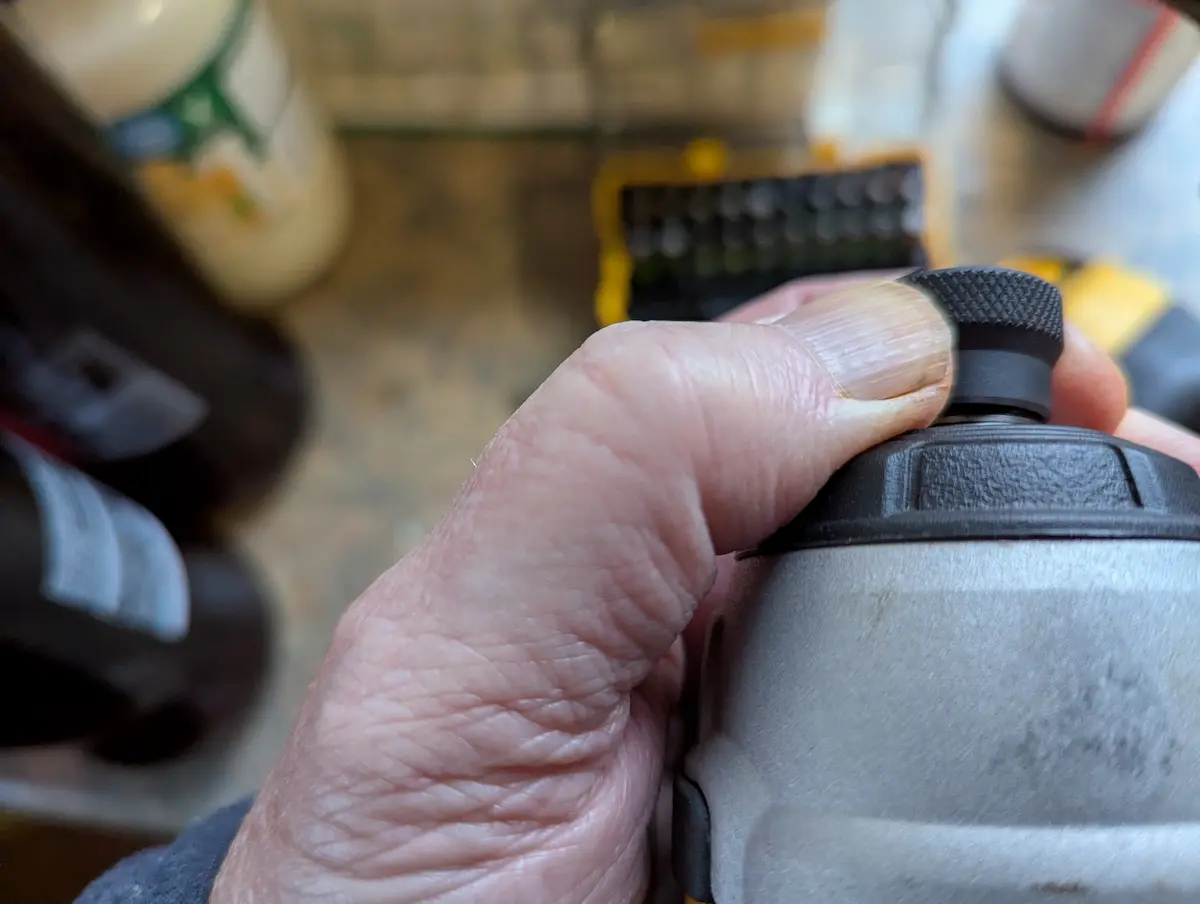
One of my favorite things about the DCF787N is the quick-release chuck. You don’t have to twist anything. You simply pull the collar forward and drop in a hex-shank bit.
Real World Use: Decking and Long Screws
In the workshop this week, I’ve been using the DCF787N for driving 70mm wood screws into treated timber.
Where the DCD776 drill might struggle or stall, this impact driver sinks them flush in seconds. It’s the difference between “forcing” a job and “finishing” a job.
DCF787N Troubleshooting & Tips
The Problem | The Likely Cause | The “Enda” Fix |
|---|---|---|
Bit keeps falling out | Not fully seated in the hex drive. | Pull the collar forward, push the bit in hard, and release. Give the bit a tug to ensure it’s locked. |
Snapping screw heads | The tool is too powerful for small screws. | Feather the trigger. The DCF787N has a variable speed trigger, don’t just go “full throttle” on small fixings. |
Loud rattling/vibration | Normal impact operation. | Don’t worry! This is the hammer mechanism working. Use ear protection if you’re using it all day. |
Trigger feels “soft” | Check the Forward/Reverse switch. | If the switch is in the middle, the trigger is locked. It’s a safety feature to stop it firing in your tool bag. |
The “Impact” Battery Rule
Because the DCF787N draws power in short, intense bursts, it actually loves the newer Powerstack batteries.
But even on a standard XR pack, it’s a beast. If you’re building a shed or a fence, this tool will save you hours of frustration.
Enda’s Workshop Tip: For making the pilot holes before you use the impact driver, check out my DCD776 Torque Guide.
The “Sound” of Success
I remember very well the first time I used this impact driver to replace some old decking boards. It actually made me jump. If you have used any combi drill to drive in some screws, there is a little noise, but any impact driver makes a whole lot more.
There is nothing to worry about though. The “clattering noise you hear” is the metal anvil hitting the hammer. It doesn’t damage the impact driver, it just makes a lot of noise.
Enda Tip: “In a small shed or workshop, the resonance and sound of an impact driver can be deafening. That is especially true when driving into hollow materials like metal or thin plywood.
I always keep a pair of ear defenders or even just foam plugs nearby. If you’re doing more than five screws, your ears will thank you.“
Impact Rated” vs. Standard Bits
When I decided to buy this impact driver, I made the huge mistake of using my screwdriver bits that I bought for my combi drill. It can damage standard drill bits and also strip the heads of screws.
It was then I discovered that you need to use impact driver bits. They have an impact resistant zone, which is added during production. This impact zone absorbs the impact force during use, which extends the service life of the bit. Regular screwdriver bits that you use on a combi drill do not have this impact zone.
Enda Tip: “Standard screwdriver bits are brittle. Under the high-torque ‘impacts’ of the DCF787N, they can literally shatter, sending metal shards across your workshop. Look for bits labelled ‘Impact Ready’ (like the DeWalt Flextorq series). They have a ‘torsion zone’ in the middle that allows the bit to twist slightly under load so it doesn’t snap.”
Controlling the Power (Variable Speed Trigger)
Since the DCF787N driver doesn’t have “gears” (unlike its more expensive brother, the DCF887 combi drill), the trigger is really your only way to control the speed of the driver.
Enda Tip: “This is a single speed tool, and that means your index finger is the gearbox. For delicate work, like fixing a hinge, I ‘feather’ the trigger. That means applying just enough pressure to make the motor hum before the impact kicks in. If you go ‘full throttle’ on a small screw, you’ll drive it straight through the timber before you can react.”
Summary
My final thought is always about do you really need to own one of these impact drivers. If you work in a trade and driving hundreds of screws every day, go for the impact driver.
If you own a drill/driver, learn to use it so that you get at least 95% of jobs done. An impact driver tool only costs around £80-£120 in the UK. I decided to buy one because I like tools, and I was building a deck and doing some fencing. I do love it but in reality, most DIYers can easily get by without one.
You can read my detailed article on the ideal starter Dewalt kit setup that I recommend for any beginner.