
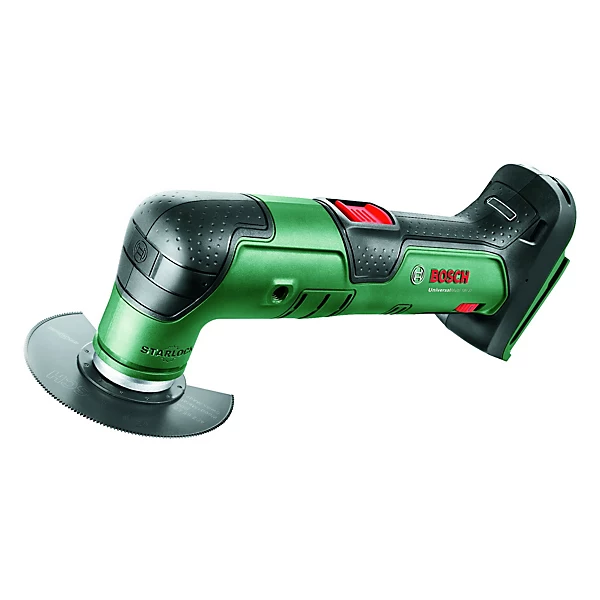
If there is one tool that deserves the title of “ultimate problem solver” in the DIY world, it’s the oscillating multi-tool. This workhorse is capable of making precise plunge cuts into wood, trimming skirting boards, sanding in tight corners, cutting tiles, scraping off old adhesives, and removing grout.
These are all tasks that would otherwise require three or four separate, specialised tools. Its versatility makes it indispensable for renovations, installations, and quick home repairs.The problem, however, is knowing where to invest. Homeowners often overspend on heavy-duty, expensive tools designed for constant trade use, or, conversely, they opt for ultra-cheap models that fail under light pressure or vibrate painfully after five minutes.
The goal of this guide is to cut through the noise and identify the best value multi-tools for the average UK DIY enthusiast and homeowner. We’ll show you the exact features that matter for intermittent use, how to avoid the biggest hidden costs, and which tools offer the best balance of power, durability, and price.
Defining “Value” – Features That Matter to DIY
When a tradesman buys a multi-tool, they prioritize sheer power and constant duty cycles. When a homeowner seeks value, they prioritise ease of use, comfort, and affordable long-term accessory costs. Here are the three non-negotiable features you must consider before buying.
Feature | Professional Grade High Cost | Value Grade Homeowner Cost | Impact |
|---|---|---|---|
Motor Type | Brushless (BL) | Brushed or older BL (less efficient) | Less runtime, slightly more maintenance (brush replacement) |
Oscillation Angle | 4° to 5° | 2.8° to 3.5° | Lower angle means slower material removal but often better precision. |
Accessory Mount | Starlock or Proprietary Quick-Release | OIS or simple Allen/Hex key release | Quick-release is faster but proprietary blades are more expensive. |
Vibration Control | Advanced Anti-Vibration Systems | Minimal or Standard Vibration Damping | Higher fatigue factor during extended use (30 minutes) |
Oscillation Angle: The Speed vs. Control Balance
The oscillation angle defines how far the blade swings back and forth. It is measured in degrees, usually ranging from 2.8° to 4.0°.
- Wider Angle (3.8° – 4°): This means the blade moves further and generally results in faster cutting and material removal. This is great for ripping through plasterboard or large areas of floor adhesive.
- Narrower Angle (2.8°-3.5°): This provides greater control and precision. It’s ideal for delicate work like cutting into existing trim, flush-cutting without damaging surrounding material, or fine sanding.
For the average DIYer, a mid-range angle (3.6° to 3.8°) offers the best balance: fast enough to be efficient, but controllable enough not to ruin the finish. If you plan on doing a lot of precise floor installation or skirting, stick closer to the 3.2° range for superior finesse.
Quick-Change Mechanism: Save Time, Save Sanity
When you are constantly switching between cutting, sanding, and scraping, the mechanism for changing blades is crucial.
- The Old Way (Screw/Hex Key): Budget models often require an Allen key or screwdriver to loosen and tighten a central bolt. This is slow, frustrating, and prone to losing small parts. Avoid this mechanism if possible.
- The Modern Way (Tool-Free Lever): Mid-range and premium models use a quick-release lever, cam, or spring-loaded clamp. This allows you to swap accessories in seconds without tools. For homeowners who will only use the multi-tool intermittently but for a variety of tasks, the time and effort saved by a quick-change, tool-free mechanism makes it a must-have value feature.
Motor Type: Brush vs. Brushless Value
The motor technology significantly affects efficiency and price:
- Brushed Motors (Best for Budget): These are cheaper to manufacture, reducing the tool’s initial price. For intermittent DIY use, where the tool runs for short bursts, a brushed motor provides excellent value.
- Brushless Motors (Best for Longevity): These motors adjust power electronically, leading to significantly longer battery run time (up to 50% more) and a longer lifespan, as they have no wearable carbon brushes. If you have bigger renovation plans or already own a cordless system, investing in a brushless body-only model offers superior long-term value.
Comparison of Top Value Multi-Tools (UK Focus)
The UK market is flooded with multi-tools, but for the homeowner focused on value, the choice often falls into one of three distinct categories. We compare the features of top examples from each category to help you choose the right tier of performance.
Category (Example) | Motor Type | Oscillation Angle | Blade Change | Target DIY User |
|---|---|---|---|---|
Budget Champion (e.g., Worx/Erbauer) | Brushed | 3.2° | Quick Lever | Light, infrequent projects; excellent entry point. |
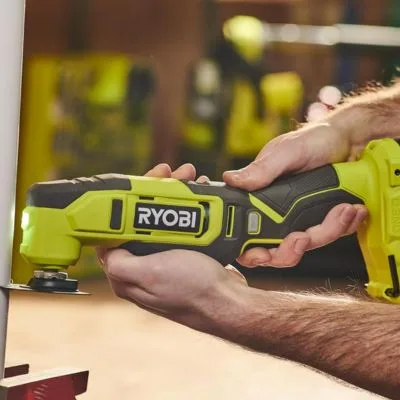
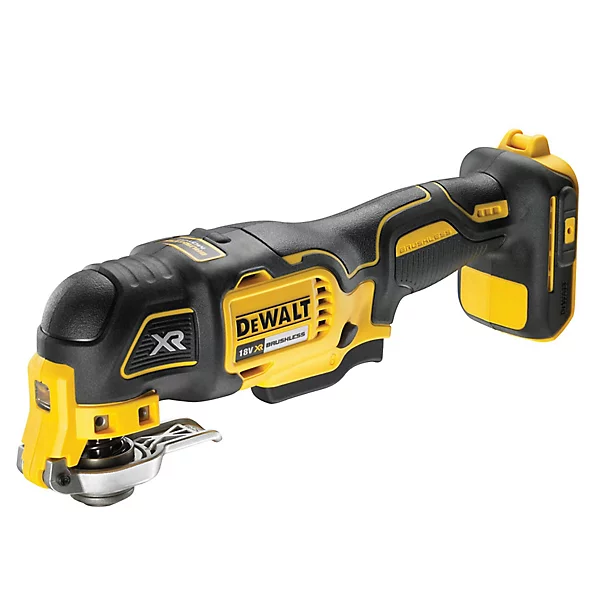
Mid-Range Versatility (e.g., Ryobi/DeWalt) | Brushless | 3.6° | Tool-Free | Already owns a battery system; needs balance of features and price. |
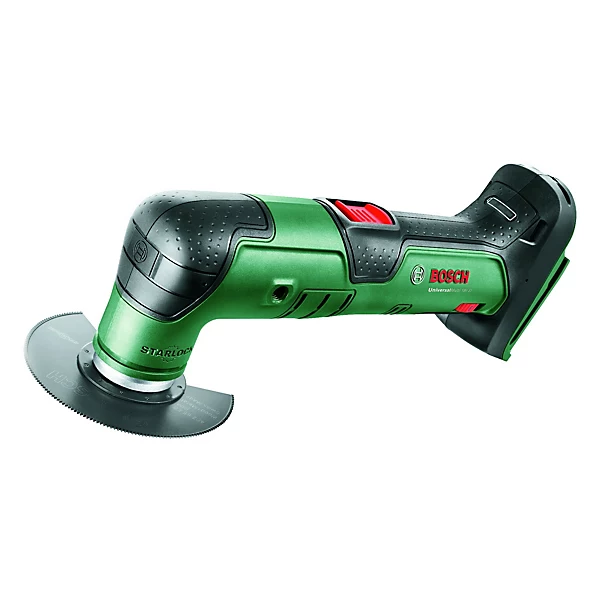
Premium DIY (e.g., Bosch Green/Fein) | Brushless | 4° | Starlock Plus | Serious renovator; needs low vibration and superior performance. |
 |  |  |
|---|
Option A: The Budget Champion – Best for Occasional Use
Tools in this category (often from brands like Worx, Erbauer, or low-tier Black+Decker) are perfect for the homeowner who needs a multi-tool for occasional use like cutting pipework or sanding one piece of furniture.
Their simple brushed motors keep the cost low, and while the vibration might be slightly higher than premium models, their inclusion of a quick lever mechanism is what pushes them into the “best value” category.
They provide high functionality without the financial commitment.
Option B: The Mid-Range Versatility King
This is the sweet spot for the enthusiastic DIYer who uses their tools regularly. Brands like Ryobi and DeWalt (in their lower-spec models) offer superior brushless motors that maximize the run time of their 18V battery packs.
The key value here is system compatibility. If you already own a Ryobi ONE+ or DeWalt XR drill, buying the multi-tool as a “body only” unit significantly reduces cost while upgrading your performance and longevity.
Option C: The Premium DIY Choice
If your renovation plans are extensive and you need to use the multi-tool for prolonged periods (e.g., scraping an entire floor or removing grout from a bathroom), brands like Bosch (Green line) or entry-level Fein tools are worth the investment.
They feature superior anti-vibration technology, wider oscillation angles (4°) for faster work, and often adopt the higher-performing Starlock Plus accessory system making the work less fatiguing and much faster.
The Critical Buying Decision: Cordless vs. Corded
For a multi-tool, the power source is a more complex decision than for many other tools, due to its dual nature as both a cutter and a sander.
Cordless Advantage
The Cordless multi-tool is defined by portability and flexibility.
- Pros: Perfect for quick, surgical cuts (e.g., cutting a bolt under the sink), working high up a ladder, or jobs far from a power outlet. The “body-only” price is cheap if you already own a battery system.
- Cons: Battery life is limited under continuous high-demand work (like sanding or heavy material removal). Multi-tools use high current, draining batteries faster than drills.
Corded Advantage
The Corded multi-tool is the definition of consistent power and maximum value.
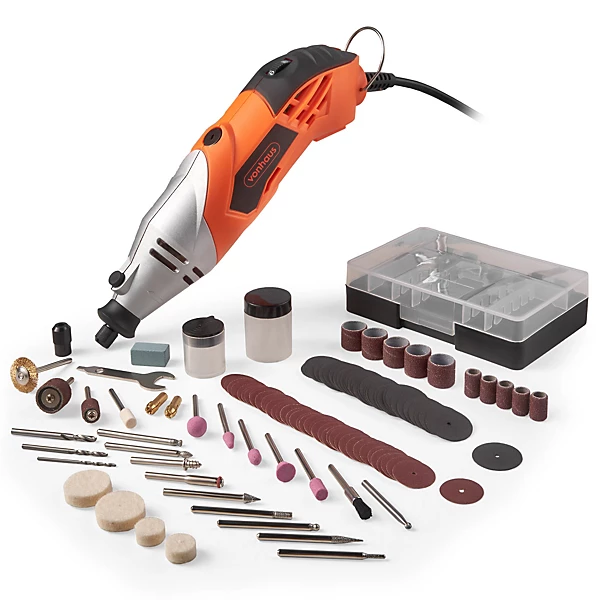
- Pros: Un-diminished power for prolonged, continuous tasks like sanding large areas or removing huge sections of tile grout. No battery cost significantly reduces the initial outlay, often making the corded version the best value tool for those without an existing battery ecosystem.
- Cons: Limited by the cord and socket location.
Recommendation: If you are buying your first multi-tool and plan to use it mostly for sanding or lengthy removal work in one location (like a garage or bathroom), the corded version offers the best value.
If your primary goal is portability for installations and quick fixes, opt for the cordless model that matches your existing battery system.
Accessory Compatibility: Starlock vs. OIS (The Hidden Cost)
The biggest hidden cost of owning a multi-tool is accessories. Blades wear out quickly, and the type of attachment system your tool uses dictates the price and availability of replacements.
OIS (Open/Universal System)
- What it is: The older, universal connection (also known as OMT or Universal). It uses a circle of holes that line up with most older tool brands.
- Advantage: Blades are cheaper and widely available from almost every third-party brand, which is excellent for long-term DIY budgeting.
- Disadvantage: Blade changes usually require a wrench or bolt, and the power transfer to the blade can be less efficient, leading to slightly slower cutting.
Starlock (Star-shaped System)
- What it is: A joint standard developed by Bosch and Fein, identifiable by its star-shaped connection pattern.
- Advantage: Superior power transfer and a true tool-free, click-in connection that locks the blade immediately. This is far more convenient and secure.
- Disadvantage: Blades are more expensive, and you are limited to Starlock-certified brands.
Advice for Value: If your primary focus is keeping long-term costs down, choose a model that uses the universal OIS system to benefit from the cheaper third-party blade market. If you prioritize convenience and efficiency for complex renovations, the Starlock system is worth the premium.
Summary Your Best Value Multi-Tool
The best value multi-tool for the UK homeowner is the one that minimizes accessory costs while providing a quick-change mechanism and matching your power needs.
For the average DIYer, we name the overall Mid-Range Versatility King (often a brushless, body-only option compatible with an existing 18V system) as the best investment. It perfectly balances longevity, performance, and flexibility. For those starting from scratch, a high-quality corded model offers the best performance for the price.
Choosing the right tool is the start; ensuring it lasts is the finish. If you’re ready to master every aspect of your professional kit, from avoiding kickback to maintaining motor health, return to the ultimate resource for safety and maintenance:
Conclusion CTA: If you’re ready to master every aspect of your professional kit, from avoiding kickback to maintaining motor health, return to the ultimate resource for safety and maintenance.
The Essential Guide to Power Tool Safety, Care, and Long-Term Maintenance