
Oscillating Multi-Tool Buying Guide for Beginners: Your DIY Swiss Army Knife!

Welcome, if you are new to DIY. Do you ever wish you had one tool that could do a little bit of everything? Well, if that’s the case, then check out the oscillating multi-tool, often called the DIYer’s “Swiss Army Knife”.
If you’re looking to tackle a variety of small to medium home projects but feel overwhelmed by needing a different tool for every job, this guide is for you.
As always, we will cut through the jargon and get straight to what really matters. That should help you choose the perfect oscillating multi-tool for your needs without costing you a fortune or leaving you feeling confused.
Why You Might Need an Oscillating Multi-Tool?
Before you even start to consider models and features, it is more important to understand why an oscillating multi-tool can be a great choice for DIY beginners.
- Precise Cutting: This is a good tool ideal for making flush cuts (e.g., trimming skirting boards in place, trimming the bottom of a door), and plunge cuts (e.g., cutting out a plasterboard hole for a socket), or trimming pipes.
- Effective Sanding: Once you fit the right attachment, it can be used to sand in tight corners, sand intricate shapes, or even remove old paint and varnish.
- Scraping & Removal: Excellent for removing old grout, adhesive, linoleum, or even dried paint.
- Grinding & Polishing: Can tackle small grinding and polishing jobs on metal.
- Versatility: It combines the functions of several tools into one compact unit, saving you space and money.
In simple terms, if you’re planning on doing detailed cutting, sanding in awkward spots, or removing materials from tight spaces, an oscillating multi-tool could be your new best friend.
The Absolute Basics: What to Look For and What to Ignore for Now!
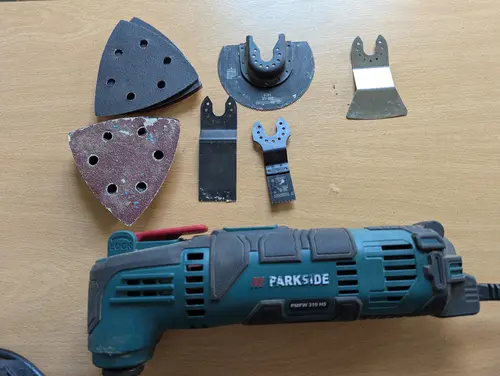
My corded Parkside Oscillating Multi-Tool with accessories
You’ll see a lot of fancy terms when you look at descriptions for these types of tools, but for a beginner, here are the most important things to focus on:
1. Power Source: Corded vs. Cordless
Corded Oscillating Multi-Tool:
- Pros: These deliver more powerful, consistent power, and there is no battery to charge. That makes them ideal for continuous, heavy-duty scraping or cutting tasks where a plug socket is available.
- Cons: You are limited by cord length and may need to use an extension lead so they are less portable.
Best for: If you are mainly working in one area (e.g., renovating a bedroom or bathroom) and have easy access to power.
Cordless Oscillating Multi-Tool:
- Pros: These are very portable so they can be used anywhere with no tripping hazards. Ideal for quick, small jobs around the house and garden or in awkward spots.
- Cons: They completely reply on battery charge and batteries can be expensive (though many brands share batteries across tools). Like for like, they have slightly less sustained power than high-end corded models.
Best for: General household tasks, working outdoors, or if you value flexibility and quick setup.
Beginner Tip:For most DIY beginners, a good quality cordless option offers the most flexibility and convenience for the tasks that a multi-tool excels at.
2. Key Features to Keep An Eye On – The Simple Stuff
Try not to get bogged down in endless specifications. For your first oscillating multi-tool, here’s what really matters:
1. Variable Speed Control
Why it’s useful: This allows you to adjust how fast the blade or attachment oscillates. Slower speeds are better for delicate work (e.g., sanding fine details) or softer materials, while faster speeds are for quick cutting or used on harder materials.
2. Tool-Free Blade Change SystemWhy it’s useful: This is a HUGE time-saver. It lets you swap attachments (blades, sanding pads) quickly and easily without needing a separate wrench or hex key. We think this is essential for convenience.
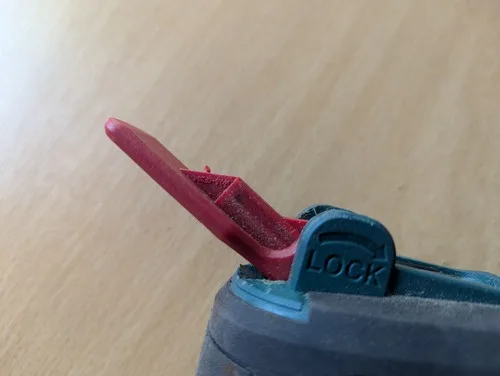
On the Parkside this is a lever that you pull up, change the accessory and then push down
3. Ergonomics/Comfortable GripWhy it’s useful: Oscillating multi-tools do vibrate quite a lot. A comfortable, ergonomic design with good grip reduces hand fatigue and makes it safer to use, especially for longer periods. It’s more important than you may first think.
4. Built-in LED Light (if applicable)Why it’s useful: Helps illuminate your workspace, which is incredibly helpful when working in dim areas or tight corners (which is often where multi-tools shine.).
5. Oscillation AngleWhy it’s useful: This refers to how far the blade moves back and forth. A larger angle (e.g., 3.2° or more) can mean faster cutting/removal, while a smaller angle might offer more precision. Don’t obsess over this for your first tool, but it’s good to be aware.
There are other features, but those mentioned above are by far the most important.
3. Don’t Forget Safety! (Your Top Priority)
Always, always prioritise your safety! When buying an oscillating multi-tool, consider the following key points:
- Read the Manual: It is usually boring, but it’s crucial for safe operation and understanding all the features. In reality it doesn’t take that long.
- Personal Protective Equipment (PPE): Always use safety glasses (essential for any cutting/sanding!), gloves, and hearing protection (for prolonged use) when operating your multi-tool.
- Secure Your Workpiece (where applicable): Ensure the material you’re working on is clamped or held securely. This prevents it from moving unexpectedly and helps you maintain control of the tool.
What’s Your DIY Project? – Matching the Tool to Your Needs
To help you decide, think about the type of DIY you’ll be doing most often. Here are a few examples with our recommendations:
“You just need to trim some skirting boards for new flooring, remove old grout, and sand a few tricky spots.”
- Recommendation: A mid-range cordless oscillating multi-tool with a good selection of starter blades/pads. Focus on a quick-change system.
- Why: The cordless flexibility will be invaluable for moving around rooms, and the included accessories will get you started on these common tasks.
“You are planning some bigger renovation projects like cutting out plasterboard for new sockets or removing old adhesive from large areas.”
- Recommendation: Consider a more powerful cordless (18V) model, or even a corded one if you have continuous, heavy-duty tasks planned. Ensure it comes with durable blades.
- Why: More power will make these tasks quicker and less taxing on the tool, and a corded model avoids battery changes during long jobs.
“You will only be using it very occasionally for very light, odd jobs.”
- Recommendation: A basic, lower-priced cordless or corded model will likely do the job. Look for a kit that includes a few essential attachments.
- Why: You don’t need to overspend for infrequent, light use, but still benefit from its versatility.
Budgeting for Your First Oscillating Multi-Tool – You Don’t Need to Spend a Fortune!
You might be surprised that good quality tools don’t always cost a fortune. For beginners, we recommend
- Entry-Level (Under £50): These are ideal for occasional, light tasks. Will get the job done, but might lack some features (like tool-free blade change) or long-term durability. These are usually corded or smaller cordless models. Think Lidl and Parkside tools.
- Mid-Range (£50 – £150): This is the sweet spot for most beginners. Offers a great balance of power, essential features (like tool-free blade change), and durability. These will see you through many projects comfortably. Often includes basic accessories. Brands like Bosch and Ryobi are in this range.
- Higher-End (£150+): Generally for more frequent, heavy-duty use, or for professionals. While tempting, you probably don’t need this for your first multi-tool. These will be from brands like Makita and DeWalt.
Beginner Tip:Look out for starter kits that include a battery, charger, and a selection of attachments with cordless multi-tools – they often offer much better value than buying components separately.
Our Top UK Brands for Beginners – Reliable & Readily Available
Here are some popular and reliable tool brands widely available in the UK that are great for beginner-friendly oscillating multi-tools:
- Bosch Green (DIY range): Known for quality, often have good beginner-friendly kits.
- Ryobi ONE+: Excellent for beginners due to their extensive ONE+ battery system, meaning one battery works with over 200 tools.
- Erbauer (Screwfix own brand): Offers solid performance and good value, especially for their EXT range.
- Worx: Often have innovative features and good value, especially their 20V PowerShare range.
- Makita / DeWalt (Entry-Level): While professional brands, they do offer some excellent entry-level or bare-tool options that can be good value if you already have their batteries.
These brands offer good performance, decent warranties, and often have a wide range of compatible accessories. They also have UK customer service and websites with parts and accessories available.
Where to Buy Your First Oscillating Multi-Tool in the UK
You’ve got lots of options:
- The Large DIY Stores: B&Q, Wickes, Homebase, (great for seeing tools in person and getting advice).
- Tool Specialists: Screwfix, Toolstation (often competitive prices, wide selection, fast click & collect).
- Online Retailers: Amazon UK (huge selection, often good deals, read reviews carefully), branded websites.
- Other Options: You can also find these at LIDL and Aldi under the name of Parkside. You can read our review of the Parkside corded multi-tool here.
Ready to Get Cutting, Sanding, and Scraping?
We hope this guide has explained the important advice on buying your first oscillating multi-tool. Remember, the best tool is the one that fits your needs, your budge. It should make you feel comfortable and confident using it. Its versatility truly makes it a fantastic addition to any beginner’s toolkit.
Don’t be afraid to start small, learn as you go, and most importantly – have fun with your DIY journey.
What’s your first project going to be with your new oscillating multi-tool? Let us know in the comments below!