
One of the main uses of a jigsaw is its ability to cut curves or shapes. Typically it is used if you want to cut out holes for a sink, make signs, shapes, or various decorative edges.
The key to smooth control has a lot to do with your technique, but it also requires the correct blade.
This guide helps UK DIYers choose the best jigsaw blades for curved cuts, with tips on blade types, materials, and what to look for.
What Makes a Blade Good for Curves?
Curved cuts require both precision and flexibility. The ideal blade should:
- Be narrow, as this allows for a tight turning radius
- Have fine teeth for smoother neat edges
- The better blades have ground teeth (milled) with deep gullets that allow the cut wood to be removed faster.
- Be made from flexible material (like high carbon steel to avoid the blade from breaking)
- Fit your jigsaw’s shank type (usually T-shank)
Tip:Wider blades are better for straight cuts—avoid them for curves.
Top Blade Picks for Curved Cuts (UK DIY Use)
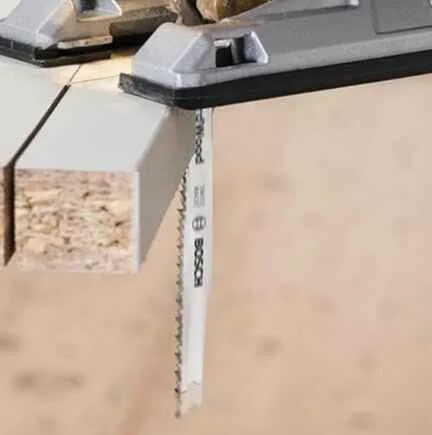
1. Bosch T101AO Clean for Wood
- This is a fine-tooth blade for softwood, plywood, and laminated panels
- It has a narrow profile for tight curves
- T-shank design fits most jigsaws
- Ideal for signs, scroll work, and decorative shapes
A 3-pack of these cost around £6 so we think very good value for money.
2. Presch Curve Cut Jigsaw Blades (10 pcs)
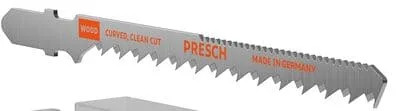
- This Presch blade has been designed specifically for clean curved sawing (4–30mm)
- Durable high carbon steel
- Great for chipboard, MDF, and softwood
You can buy these at Amazon UK and a 10 pack costs around £19
3. TopsTools T119BO Scroll Cutting Blades
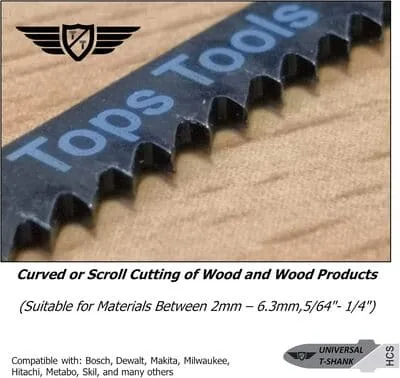
- 15-pack for curved or scroll cuts in wood
- High-quality steel for durability
- Compatible with Bosch, DeWalt, Makita, and more
These are available at the TopsTools website, Amazon UK, eBay and many other stores. A 5 piece set costs around £3 so excellent value for money.
4. Create Idea T101AO Blade Kit
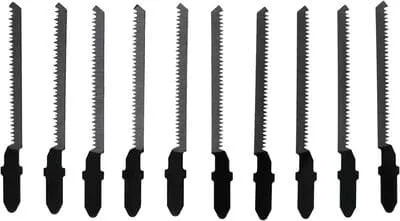
- Budget-friendly 10-pack
- Ideal for laminate, wood, and plastic
- Narrow blade with fine teeth for smooth curves
Available at Amazon UK with a 10 pack costing around £11
Blade Materials Explained
- High Carbon Steel (HCS): Flexible and ideal for curved cuts in wood, so ideally your blade should be made from HCS if you want to make curved cuts and avoid breaking your blade.
- High-Speed Steel (HSS): More durable but less flexible—better for straight cuts
- Bi-Metal: Combines flexibility and durability—great for tougher materials
- Tungsten Carbide: Extremely durable but not ideal for tight curves
Blade Width & TPI (Teeth Per Inch)
- Narrow blades = better curve control
- Higher TPI (10–20+) = smoother finish
- Shorter blades = easier to manoeuvre in tight shapes
Tip: Practice on scrap wood before cutting your final design.
The right blade allows your jigsaw to become very precise. For signs, scroll work, and decorative shapes, choose narrow, fine-tooth blades made for curved cuts.
Brands like Bosch, Presch, and TopsTools offer excellent options for UK DIYers.
Want to improve your jigsaw skills further? Check out:
- How to Use a Jigsaw for Beginners
- How to Change a Jigsaw Blade Safely
- Jigsaw Safety Tips Every DIYer Should Know