
If you’ve just picked up your first jigsaw and aren’t sure where to start, this guide is for you. Whether you’re cutting shelves, trim, or simple shapes, we’ll walk you through everything you need to know to get started safely and confidently.
What Is a Jigsaw?
A jigsaw is a handheld power saw that uses a thin, vertical blade to cut wood, plastic, and even metal. It’s the best choice if you need to make curved cuts, notches, and plunge cuts. That makes it one of the most versatile tools in any DIYer’s kit.
Unlike circular saws or mitre saws, jigsaws are lightweight, easy to control, and a very good choice for beginners. You can use them for a wide range of jobs from cutting out kitchen countertops to crafting wooden signs.
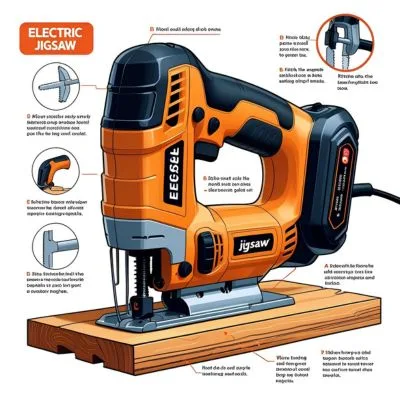
Parts of a Jigsaw (and What They Do)

Blade: The cutting edge—choose the right one for your material
- Shoe/Baseplate: Rests flat on your workpiece and can tilt for bevel cuts
- Handle & Trigger: Controls the saw’s power and speed
- Speed Dial: Adjusts stroke rate (SPM) for different materials
- Orbital Setting: Controls how aggressively the blade moves—higher for fast cuts, lower for clean ones
- Blade Clamp: Tool-free on most modern models for quick blade swaps
- Dust Port: Connects to a vacuum to keep your workspace clean
Choosing the Right Blade
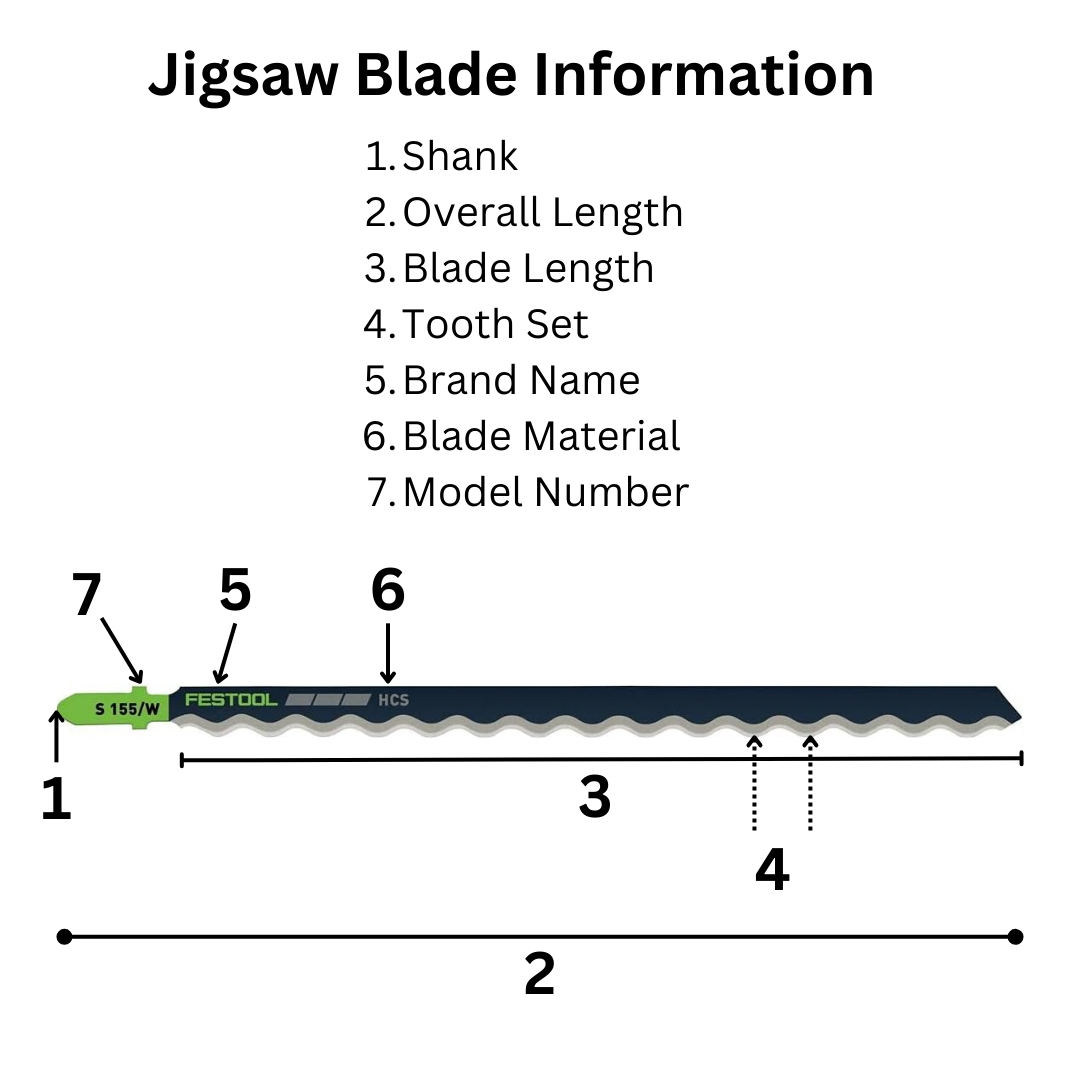
T-shank blades are the UK standard—easy to install and widely compatible
- U-shank blades are older and less common
TPI (Teeth Per Inch)
- 6–10 TPI = fast, rough cuts
- 10–20 TPI = smoother, cleaner cuts
- 20+ TPI = fine cuts in metal or laminate
Material Match
- Wood: general-purpose or clean-cut blades
- Metal: fine-tooth blades
- Laminate: reverse-tooth to reduce splintering
Pro Tip: Keep a small blade set handy so you’re always ready for different materials.
Setting Up for the Cut
Before you power up, take a few minutes to prep properly:
- Mark your cut line clearly with pencil or masking tape
- Clamp your material securely to a stable surface
- Wear safety gear: goggles, dust mask, and ear protection
- Check your blade: sharp, straight, and suited to the job
- Adjust settings: orbital action off for clean cuts, on for speed, and set the speed dial lower for plastics or metal.
Making Your First Cut
Here’s how to make your first cut smooth and stress-free:
- Start slow: Let the blade reach full speed before touching the material
- Keep the shoe flat: Don’t tilt or lift mid-cut
- Guide gently: Let the blade do the work—no forcing
- Use a straight edge guide for long, accurate cuts
- For curves: go slow and pivot gradually
- For plunge cuts: drill a starter hole or tilt the jigsaw forward and ease in slowly
Common Beginner Mistakes To Avoid
Even experienced DIYers slip up—here’s what to watch for:
- Forcing the saw – Leads to bent blades and rough edges
- Using the wrong blade – Causes splintering, burning, or blade breakage
- Cutting unsupported material – Creates vibration and inaccuracy
- Ignoring orbital settings – Can result in tear-out or slow progress
- Not Using clamps: Makes your workpiece shift mid-cut
Beginner Project Ideas
Want to practice your skills? Try one of these:
- Floating shelves – uses straight cuts and simple to make brackets
- Wooden signs – Great to practise curves and stencil works
- MDF cut outs – Making shapes for kids’ rooms or for items in your garden
- Simple garden planters – Combines straight and angled cuts
- Tool Rack or a Pegboard – Allows you to add notches and slots with good precision
Basic Troubleshooting – What Isn’t My Cut Clean?
If your cuts are rough or splintered, try this:
- Use a clean-cut blade with higher TPI
- Apply masking tape over the cut line
- Cut from the underside of veneered boards
- Reduce orbital action and slow down the speed
- Make sure the blade is sharp and straight
Still struggling? Practice on scrap wood until you find the right combo of blade and settings.
Aftercare & Maintenance
- Unplug or remove the battery before changing blades
- Clean the shoe and vents regularly to prevent dust build up
- Store blades safely in a case or magnetic strip
- Check for loose screws or worn parts every few uses
A well-maintained jigsaw lasts longer and cuts better.
Keep Learning
Want to go deeper? Check out:
- Best Jigsaw Blades for Clean Wood Cuts
- Jigsaw Safety Tips Every DIYer Should Know
- Jigsaws Hub Page – for more guides, reviews, and cutting tips